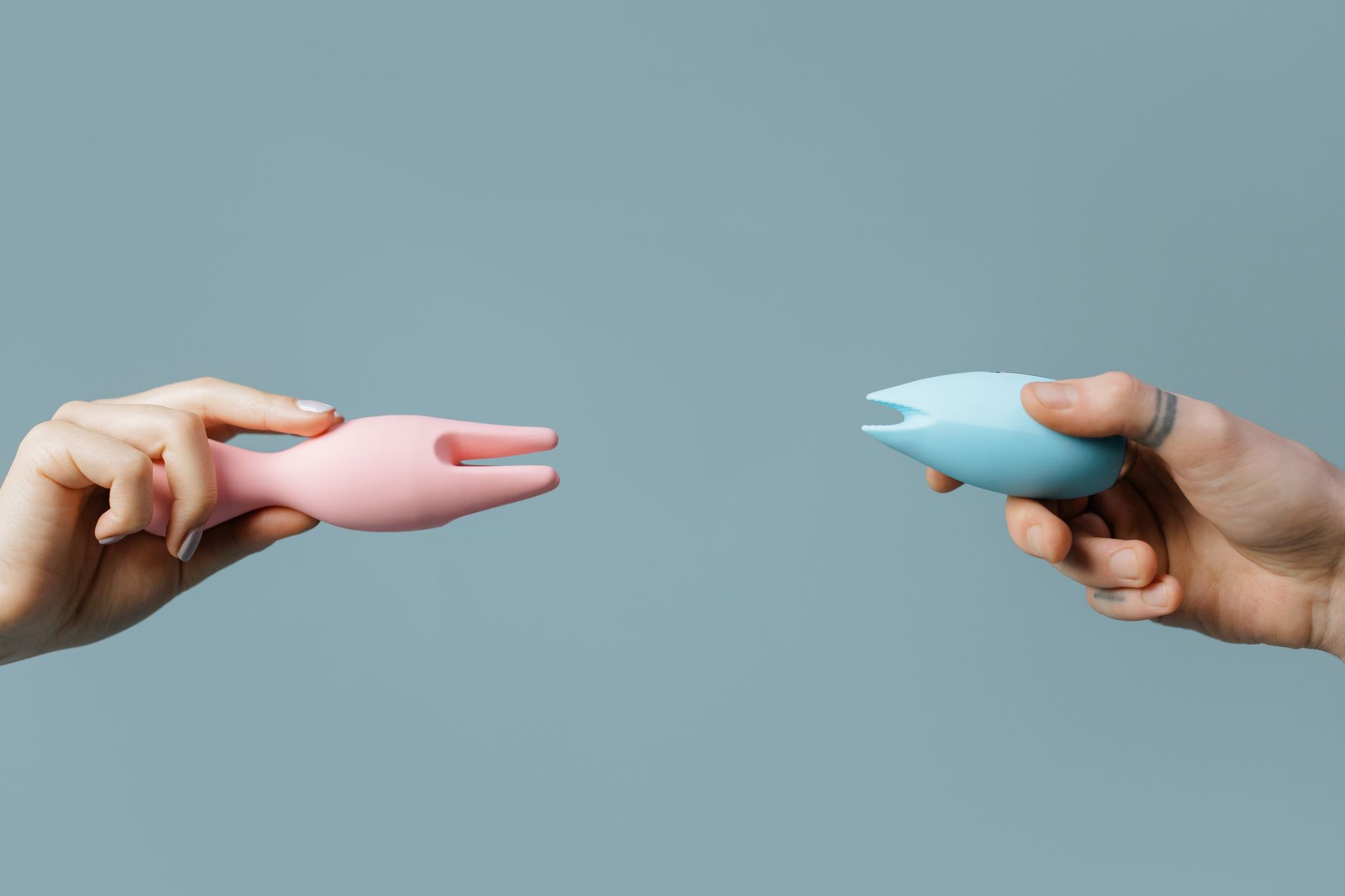
How to Use Lemon Vibrators When You Want Touch But Feel Numb After Medication
Here's the thing nobody tells you when they hand you a prescription: the medication that saved your mental health might also turn your body into a stranger.
Most people know that SSRIs, antipsychotics, and some blood pressure meds can flatten mood and energy. What stays quiet is that they also numb sensation. Not always. Not in everyone. But often enough that you're probably not imagining it. Your partner touches you, you feel... surface-level contact. Like you're hearing sex through a wall instead of being in the room.
The guilt compounds fast. You wanted to get better. You did get better. And now pleasure feels impossible, which makes you feel ungrateful, which makes you withdraw, which makes your partner feel rejected, which makes everything hurt worse. I've sat with couples in this exact spiral for fifteen years.
Here's what actually works: understanding why the numbness happens, knowing that it's not permanent or inevitable, and using tools like lemon clitoral vibrators in ways that work with the neurological flatness instead of fighting it.
Why medication numbs sensation in the first place
It's not magic. It's chemistry.
SSRIs (serotonin reuptake inhibitors) work by keeping more serotonin available in the synapse. That's good for mood regulation. But serotonin also regulates sensation, arousal, and orgasm. Increase serotonin in one part of your system, and you might dampen the signaling in another. Antipsychotics do something similar but heavier. Beta-blockers tank arousal by reducing blood flow. Some antidepressants interfere with dopamine, which is the "wanting" neurotransmitter.
Your nervous system isn't broken. It's being told to turn down the volume on everything. And yes, that includes pleasure.
The weird part: you can usually tell your brain is aroused. Your thoughts turn on. Your heart rate rises a little. But the physical sensation from touch—the thing that's supposed to feel like pleasure—barely registers. It's like the wire between your skin and your brain got cut.
Why standard vibrators often don't help (and clitoral ones do)
If you're numb, gentler vibration feels like nothing. So the instinct is to buy something stronger. And sometimes that works. But most of the time it just feels like buzzing against dead skin.
Here's why lemon clitoral vibrators, particularly suction-based ones like the Lem vibrator, change the equation: they don't rely on sensation alone.
Subtle buzzing travels through tissue slowly. Your dulled nerve endings have time to not register it. Suction works differently. It creates sustained pressure and rhythmic pulling that stimulates a broader nerve bundle, not just surface touch. It bypasses some of the signal delay that medication creates.
Think of it this way. If your sensory signal is moving at half speed, you need stimulation that doesn't require fast feedback. Suction does that. It pulls consistently, giving your nervous system something substantial to work with, even when the fine-detail sensations are muted.
What actually helps: starting with pressure, not intensity
When you're medicated and numb, the first mistake is cranking the vibrator to level 8 because you assume you need maximum everything to feel anything.
Wrong. You need sustained pressure first, then graduated intensity.
Here's the sequence I recommend to almost every client navigating this:
Week one: pressure mapping. Use a lemon clitoral vibrator at its lowest setting—settings 1 or 2. Don't chase sensation. Instead, move it around and notice where you feel the pressure most. For most people, that's the left or right side of the clitoris, not the tip. Use a lube (water-based only with silicone toys). Spend 20 minutes mapping. You're training your nervous system to recognize sensation again, not chasing orgasm.
Week two: consistent pressure. Pick the spot that felt the most present. Return to it daily, same setting, same lube, same amount of time. Boring is the goal. Your medicated brain needs repetition to rewire that pleasure pathway.
Week three: micro-increases. Once level 1-2 feels like something you register, move to level 2-3. One setting up. Stay there for a week.
You're not trying to orgasm yet. Orgasm is downstream. Right now, you're rebuilding the signal.
Timing matters more than you think
Some meds kill sensation worse at certain times of day.
If you take an SSRI in the morning, afternoon sensation is often flattest. Early morning, right after you wake and before the dose has reached peak concentration, sometimes feels sharper. Same with antipsychotics. If you take it at night, morning can feel clearer.
Talk to your prescriber (yes, really) about whether taking your dose at a different time might help without tanking efficacy. Sometimes a small tweak makes a difference.
Otherwise, experiment. Try using a lemon vibrator at different times and note what you feel. You might find a two-hour window each day where sensation is slightly less muted. That becomes your window.
When to talk to your doctor about switching or adjusting
Here's where I'm very clear: medication numbness is real, but it's not always permanent, and it's not always the dose you're on.
Some people respond better to different SSRIs. Sertraline kills orgasm in person A but doesn't touch it in person B. Some people tolerate antipsychotics at lower doses if they're willing to manage their symptoms slightly differently. Some doctors will add a small dose of something else—like bupropion (Wellbutrin), which increases dopamine—to counteract sexual side effects.
None of this means stopping medication. It means having an honest conversation: "I'm on X. I feel numb. I want to explore whether a different dose, timing, or medication might help." Some doctors will say no, it's not possible. Others will say let's try.
You deserve a doctor who takes this seriously. If yours doesn't, find one who does.
Solo pleasure, partnered pleasure, and what changes between them
Most of my clients report that solo sensation is slightly sharper than partnered sensation when medicated. That's not unusual. With a partner, you're managing emotional stuff ("Am I attractive?", "Will they judge me?"), performance pressure, and your own self-consciousness. That mental load makes numbness worse.
When you're alone, there's no external pressure. You can focus purely on sensation without the cognitive drag.
This matters because it means if you're struggling to feel pleasure with a partner, rebuilding sensation solo first is strategic, not selfish. You're giving your nervous system a clearer signal to work with.
Once you've found a pattern that registers—a setting, timing, pressure point, lube—you can move that knowledge into partnered time. "I feel this the most on level 2, around the side, with lots of lube." Now your partner isn't guessing. They know what actually works.
Communication that actually lands
Here's what partners hear when you say "I feel numb": "Something's wrong with me, and there's nothing you can do."
What you actually mean: "My nervous system is responding differently right now, and here's what helps."
The difference is agency. One sounds like a problem. The other sounds like a direction.
Instead of "I can't feel anything," try: "Right now sensation takes longer to build. I need longer foreplay, more pressure, and less speed. If I use a lemon vibrator at this setting with lube, I can feel the difference. Can we try that together?"
Now you're not broken. You're different. And different has a solution.
What happens over time
Medication numbness often softens after 3-6 months as your body adjusts. Not always completely. But often. Some people find that their sensation returns to 70-80% of baseline. Others report it stays flat.
But here's what I've watched happen: even when sensation stays muted, the experience of pleasure can deepen. Why? Because you've stopped fighting your body and started working with it. You know what pressure helps. You know the timing. You're not chasing sensation you can't feel. You're present with what is there.
That presence—that "I'm here in my body, and this matters"—is a different kind of pleasure than the sensory rush people expect. It's quieter. But for a lot of couples, it's deeper.
The lemon clitoral vibrators help because they give you something tangible to build on while your nervous system recalibrates. Use them as a bridge, not a forever solution. Some people find they eventually need them less. Others find they always want them. Both are fine.
People Also Ask
Can medication numbness ever fully go away?
Sometimes yes, sometimes no. It depends on the medication, the dose, your individual neurology, and how long you've been on it. Numbness from SSRIs often improves slightly after 3-6 months as your body adjusts. Some people experience complete return of sensation. Others plateau at 70-80%. Antipsychotics are often more persistent. The best move is to check in with your prescriber after a few months on any new medication and be honest about sexual side effects. There are often adjustments or alternatives worth exploring.
Is it normal for lemon vibrators to feel like nothing at first?
Completely normal when you're medicated and numb. Your nervous system isn't registering fine sensations yet. Start with sustained pressure at low settings rather than high intensity. The goal first is to teach your body to notice the vibration, not to chase orgasm. After a week or two of consistent low-setting use, sensation often becomes more obvious. If it still feels like absolutely nothing after three weeks, talk to your doctor about whether the medication might be contributing.
Should I tell my partner I'm using a vibrator because of medication numbness?
Yes, eventually, if you're in a partnership. Not as a confession, but as information: "I've been experimenting with how to feel sensation better while I'm on this medication, and I found that using a Lem vibrator with sustained pressure at this setting actually registers. I'd like to try it together if you're interested." You're not announcing a problem. You're sharing a solution. Most partners find this relieving because it means there's something they can actually do instead of just feeling helpless.
Can I combine lemon vibrators with other techniques to regain sensation?
Yes. Kegel exercises (pelvic floor contractions) sometimes help recalibrate sensation. Mindfulness during solo time—paying attention to every sensation, even if muted—can train your brain to notice subtler stimulation. Extended foreplay helps because it gives your nervous system more time to activate before you're expecting orgasm. Longer warm-up, lube, consistent pressure, and patience together are more powerful than any one tool alone.
What if my medication numbness gets worse over time?
Report it to your prescriber immediately. Sometimes tolerance builds and sensation flattens further. Sometimes something else is happening. Your doctor needs to know. There are often things to try: dose adjustment, different timing, a different medication in the same class, or an add-on medication to counteract sexual side effects. Medication numbness is not something you're supposed to just accept as the cost of mental health. It's a side effect worth addressing.
How long before I should expect to feel improvement?
The first two weeks are usually a wash—you're learning your body's landscape, not expecting sensation yet. Weeks three and four, most people report that the vibrator feels noticeably less like nothing and more like something. By week six, many clients say sensation has improved measurably. But everyone's timeline is different. Some people see change in days. Others take months. Consistency matters way more than speed. Daily 20-minute sessions beat sporadic hour-long attempts.
The bigger picture
Medication saved your mind. That's the win. The fact that it also numbed sensation is a real cost, and it's worth solving. But it's not unsolvable. Most of the couples I've worked with who were stuck in this exact place—mentally healthier than ever, physically numb, feeling like something fundamental was broken—found their way back to pleasure by approaching it differently.
That difference is what lemon vibrators and patience and honest communication make possible. You're not trying to feel like you did before. You're learning what pleasure feels like now. And that's its own kind of intimacy.
If you want more guidance on rebuilding intimacy after medication changes or other big transitions, get in touch. That's what I do.