
Here's what nobody wants to admit
You touch yourself the way you always have, and nothing happens. Or something does, but it feels like you're watching it from three rooms away. The sensation is there, technically, but the signal between your body and your brain has gone quiet. This is more common than you think, and it's almost never a permanent problem.
The good news? Lemon vibrators and other clitoral vibrators are purpose-built for exactly this. Not as a band-aid, but as a reset tool that can help rewire sensitivity and bring pleasure back online.
Why sensation goes quiet
There are roughly five reasons your clitoris stops answering the phone the way it used to.
Repeated stimulation in the same way, in the same place, at the same speed. Your nervous system gets bored. Literally. The brain stops sending "that's new, pay attention" signals. This happens to long-term partners, solo users, or anyone in a pleasure routine. It's not damage. It's adaptation.
Medications that flatten dopamine or blood flow. Antidepressants, blood pressure meds, and birth control can all muffle sensation. So can antihistamines. Talk to your doctor, but don't assume it means you need to stop taking them. Often it just means you need a different approach.
Hormonal shifts without replacement. Menopause, perimenopause, and hormonal contraceptive changes all affect clitoral tissue thickness and blood flow. Less estrogen means less sensitivity, sometimes dramatically.
Anxiety or dissociation as a protective mechanism. When your mind is worried, your nervous system pulls sensation offline to protect you. It's actually smart. Your body isn't broken. Your mind is being cautious.
Pelvic floor tension from stress, trauma, or repetitive bracing. A clenched pelvic floor is a numb pelvic floor. Tension in the pelvic floor muscles reduces blood flow to the clitoris and dampens nerve transmission.
None of these are permanent. All of them respond to the right intervention.
How lemon vibrators work differently
A standard vibrator just vibrates. A lemon vibrator, specifically the kind that uses air-suction technology, works through a completely different mechanism. Instead of repetitive vibration in a fixed location, suction creates a gentle pulse that moves through the entire clitoral complex. For people whose sensation has gone quiet, this is a game-changer.
Here's why. Your clitoris isn't just the visible button. It's a complex organ with a shaft, roots that branch down into your body, and thousands of nerve endings. When sensation feels muted, it's often because the sensation pathways in that entire structure have gotten lazy. Air-suction stimulation wakes up different nerve clusters all at once, creating a feeling that's genuinely novel. Your brain perks up. Your nervous system pays attention. That's when rewiring starts.
The rebuilding protocol
If you're starting with a lemon sexual toy or any clitoral vibrator after a period of numbness or muted sensation, follow this sequence. It takes 3-4 weeks typically, though some people see shifts in 2-3 sessions.
Week 1 and 2: Low intensity, short sessions, novelty focus. Start on the lowest pattern or setting. Spend 5-8 minutes. The goal isn't orgasm. The goal is attention. You're training your nervous system that this sensation matters. Move the vibrator around. Change the angle. Try different positions. Your brain needs new input, not repetition of the old input.
Week 3: Add duration, keep intensity low. Now extend to 10-15 minutes. Still staying in the lower range of patterns. Notice what starts to feel good. Your sensitivity should be increasing slightly. Some people notice a warm feeling, a tingle, or just a general "oh, I'm starting to feel more" sensation.
Week 4 and beyond: Find your rhythm, experiment with speed. Now you can start experimenting with higher patterns if you want them. Or you might find you prefer the lower settings with longer exposure. The key is you're no longer numb. You're actually feeling something.
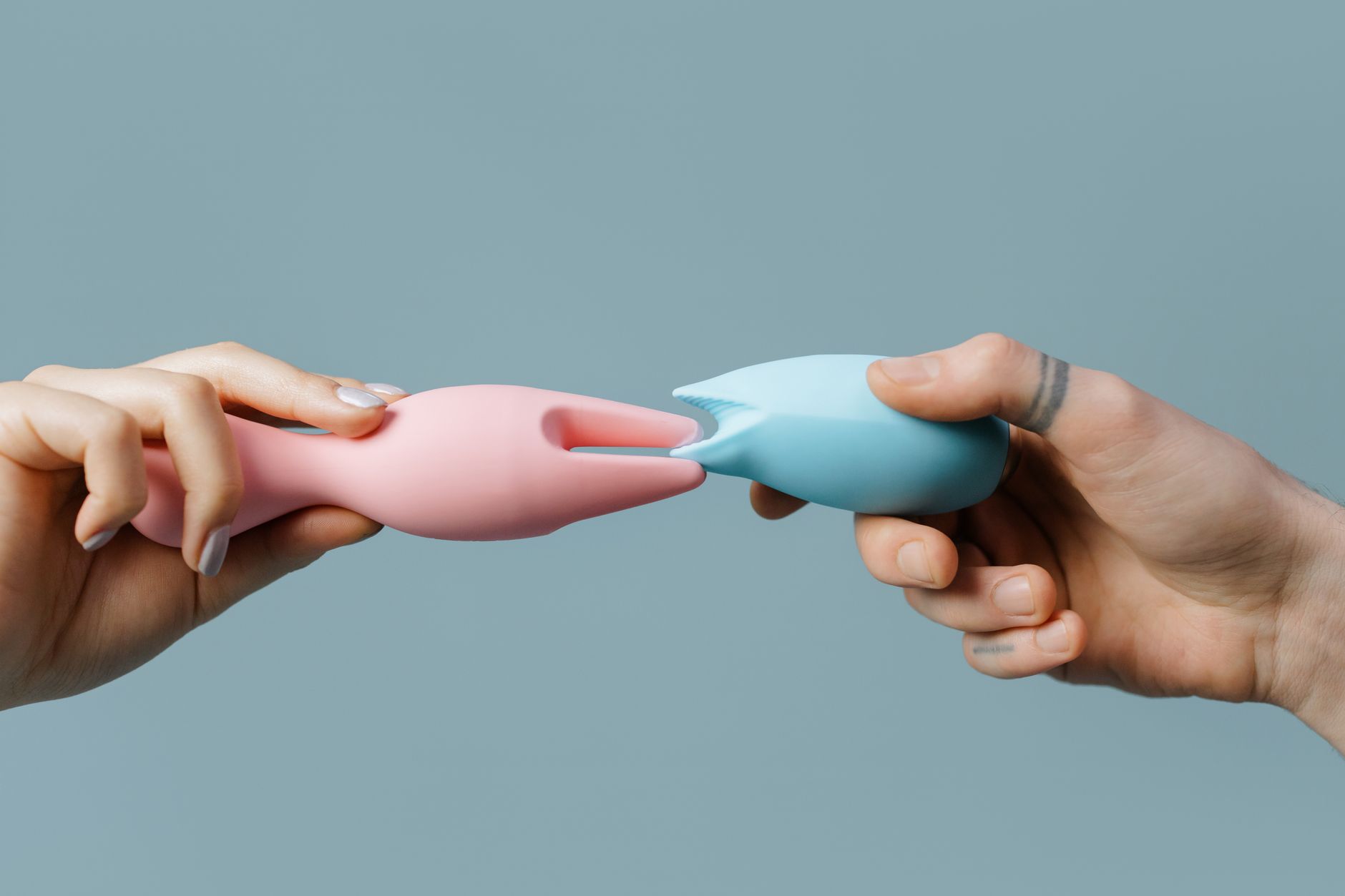
Photo by cottonbro studio on Pexels
The mental piece matters as much as the physical one
Here's the thing nobody warns you about: rebuilding sensation isn't just mechanical. If you've been numb, there's usually a reason your brain went offline in the first place. Pressure to perform, anxiety, relationship dynamics, past experience, or just plain exhaustion all contribute.
While you're rebuilding physical sensation, check in with yourself about the mental landscape. Are you expecting this to work instantly? Are you frustrated that it's taking time? Are you putting pressure on yourself to reach an orgasm? Any of those will slow down the process.
Instead, approach these sessions like you're getting to know your body again. You're not fixing something broken. You're reintroducing yourself to pleasure. That sounds soft, but it's also the fastest way back to actual sensation.
If anxiety or dissociation is the root cause, adding a clitoral vibrator is genuinely helpful, but it might also be worth checking in with a therapist. Sensation is tied to presence. You can't feel what you're not connected to.
Common mistakes that slow down the rebuild
Jumping to maximum intensity too fast. Your nervous system is hypersensitive right now, even though you can't feel much. High intensity can actually create avoidance patterns. Go slow on purpose.
Using lemon vibrators the exact same way every time. If you're numb because your body adapted to one specific stimulus, doing the exact same thing with a toy will just recreate the problem. Move it around. Change angles. Switch up timing.
Doing this on a schedule, not on desire. The moment this becomes a chore, it stops working. If you're not feeling a little spark of interest before you start, wait until you do. Even if that's only twice a week at first.
Ignoring the pelvic floor. If your pelvic floor is clenched from stress, no vibrator, no matter how good, will fully rewire sensation. Consider adding pelvic floor relaxation work. Simple belly breathing before sessions helps. Some people find that a few sessions with a pelvic floor physical therapist makes a huge difference.
When to layer in a partner
If you have a partner, rebuilding sensation together can deepen connection. But timing matters.
Start solo for at least 2-3 weeks. You need to rebuild your own relationship with sensation without any performance pressure. Once you're feeling more, introduce your partner. Show them what you're discovering. Let them explore the lemon vibrator with you, but make it collaborative, not directive. This is you and them learning your body together, not them "fixing" you.
Many couples find that this process, done slowly and without agenda, brings more intimacy than they've felt in years. The rebuild isn't just about sensation. It's about presence and attention.
When numbness is something else
If after 4-6 weeks of consistent use you're still feeling nothing, or if the numbness is paired with pain, see a gynecologist or pelvic floor physical therapist. Some causes of sensation loss need professional support. Nerve compression, hormonal issues, or certain medications need medical attention, not just a better vibrator.
But for the majority of cases where sensation has just gotten quiet from routine, stress, or adaptation, clitoral vibrators like the ones from Lemon Nancy create a genuine reset. They're not magic. They're just novel stimulation that your nervous system is designed to pay attention to.
The rewiring happens faster than you think
Most people notice a real shift in sensitivity within 2-3 weeks of consistent use. Not necessarily explosive pleasure yet, but a genuine "oh, I'm feeling something again" moment. That's the nervous system waking up. From there, pleasure builds naturally.
The key is patience with yourself and permission to explore without pressure. Your body isn't broken. It just needs novelty, attention, and a little time to remember what sensation feels like.
If rebuilding sensitivity is your goal, learn which lemon vibrator pattern works best for your body and understand how pelvic floor tension affects sensation. Both are part of the full picture.
Frequently asked questions
How long does it take to feel sensation again after numbness?
Most people notice a real shift within 2-3 weeks of consistent use, though some feel changes within days. The timeline depends on why the numbness happened in the first place. If it's from medication, it might take longer. If it's from routine adaptation, the shift is usually faster. Consistency matters more than intensity. Three or four 10-minute sessions a week outperforms one 45-minute marathon session.
Can medications make sensation come back if I have to stay on them?
Yes, usually. If a medication is flattening sensation, your doctor might be able to adjust the timing, switch to a different medication in the same class, or add a medication that counteracts the side effect. But it's also possible to rebuild sensation while staying on the medication. The combination of novelty stimulation from lemon vibrators plus pelvic floor work plus other lifestyle changes can sometimes overcome the medication's effect. Always talk to your prescriber first before stopping or changing anything.
Is it normal for sensation to feel different in different areas of the clitoris?
Completely normal. The clitoris has different nerve densities in different spots. The visible glans, the shaft, and the roots all have slightly different sensation profiles. Many people find that using an air-suction toy helps them discover these differences because it stimulates a larger area at once. You might find that one area feels much more responsive than another. That's useful information, not a problem.
Will using a lemon vibrator make me dependent on it for sensation?
No, but this is a really common fear. The evidence shows the opposite. People who use novel stimulation to rebuild sensation often end up with more versatile pleasure afterwards. They can feel more things in more ways, including manual touch. The vibrator is the bridge, not the destination. Once sensation comes back online, you'll have more options, not fewer.
What if my partner is worried that using a toy means our sex life is failing?
This is worth a direct conversation. Frame it as exploration and rebuilding together, not as a substitute. Many couples find that introducing a lemon vibrator into their shared experience actually deepens intimacy. It's novelty and attention focused on pleasure, which is something many long-term couples are starving for. Learn how to introduce clitoral vibrators to partners without awkwardness if you need a roadmap for that conversation.
Can I use lemon vibrators if I'm on certain medications?
In almost all cases, yes. Vibrators are just external stimulation. They won't interact with medications the way some activities might. That said, if a medication is affecting your sensation, using a vibrator won't necessarily fix the underlying cause. It can rebuild sensation pathways while you work with your doctor on the medication piece. The two things can happen in parallel.