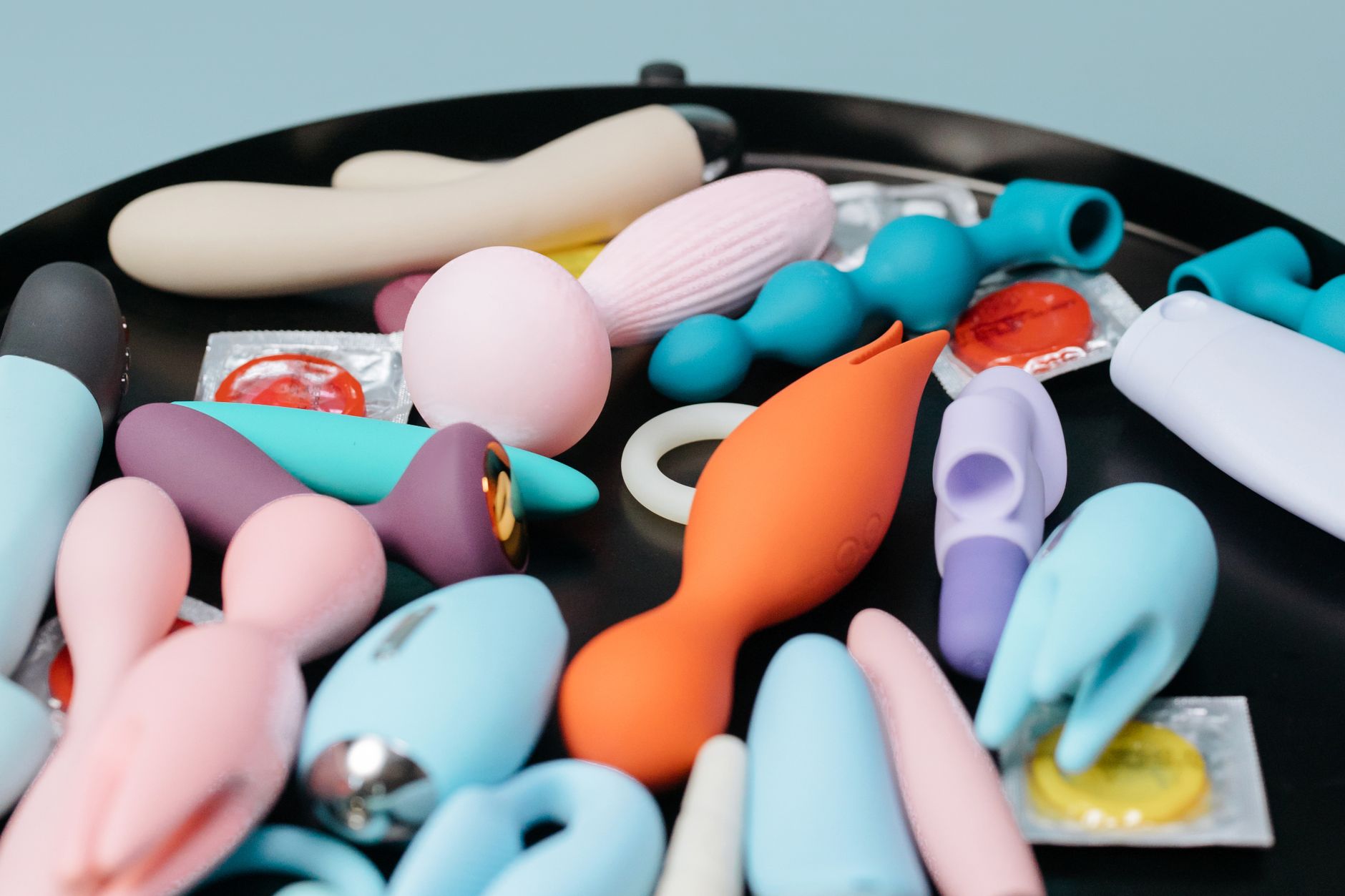
Let's be real about the awkwardness
You want to bring lemon vibrators into your partnered sex life. But the idea of actually saying it out loud feels risky. What if they think you're not satisfied? What if they feel replaced? What if the whole thing becomes this weird, clinical thing where all the spontaneity drains out of the room?
Those fears are normal. And they're also solvable.
I've worked with hundreds of couples navigating this exact moment, and the pattern is always the same. The conversation feels harder in your head than it does in reality. Once you separate the logistics from the emotion, and frame it correctly, most partners actually react with relief or curiosity. Here's how to do it.
The reframe that changes everything
Don't lead with "I want to try a vibrator." That's outcome-focused and triggers the "am I not enough" defense.
Lead with curiosity and a shared goal instead: "I've been reading about lemon vibrators lately, and I think they could be really fun for us together. I want to explore what feels good." That framing does three things at once.
First, it positions this as something collaborative, not something you're doing to your partner or without them. Second, it signals that you're thinking about shared pleasure, not individual need. Third, it shows you've done some thinking, which tends to feel less spontaneous and chaotic than "Hey, let's try this thing I just thought of."
The word "together" matters. So does "fun." Avoid language that's clinical ("stimulation"), apologetic ("I know this is weird"), or needful ("I really need this").
When to have the conversation
Timing is everything. The worst time is during sex or right before it. The second worst time is in the middle of an argument or when you're both stressed. The best time is when you're both relaxed, awake, and have 10 minutes of uninterrupted space.
Some couples do this over dinner on a weeknight. Others do it after a walk, or on Sunday morning with coffee. The venue matters less than the vibe. You want a moment where you're already connected and there's no performance pressure.
Avoid doing it via text unless you're normally a texting couple about intimate topics. A real conversation is a real conversation, because they can ask follow-up questions and you can read their energy in real time.
The actual words
Here's a template that works.
"I've been thinking about ways we could experiment together and feel even more connected. I came across information about lemon vibrators, and I think they're worth exploring. The reason I'm interested is because I want to feel more pleasure together with you, not instead of you. Would you be open to learning more about how this could work for us?"
That's it. You've named the thing, explained the why (shared pleasure), addressed the unspoken fear (not a replacement), and given them an out without shame.
Their first response might not be "Yes, let's order one right now." They might say "I don't know, I'm not sure about that" or "Can we think about it?" All of those are fine. You're not looking for an instant yes. You're looking for a genuine conversation.
What to do if they're hesitant
Hesitation doesn't mean no. It usually means they need more information or time to adjust the mental picture they had in their head.
Ask clarifying questions: "What are you worried about?" or "What would make you more comfortable?" Listen without defending. Maybe they're concerned about size or sensation, or maybe they think it will feel weird or clinical. Those are real concerns with real solutions.
For example, if they worry it's replacing them, you can say: "It's actually more like adding something in the mix. Think of it like a tool that helps your hand feel different, not something that takes your hand out of the equation."
If they're concerned about the physical sensation, suggest starting with watching videos together or reading reviews from couples who've tried lemon clitoral vibrators. Seeing other people talk about how much they enjoyed it together tends to shift the frame from "weird" to "oh, that's actually normal."
Don't push. But do stay in the conversation. The difference between "Okay, never mind" and "I'm open to thinking about this" is often just one good follow-up question.
How to move from talking to trying
Once you both agree to explore this, the next step is choosing what to try. This is actually where a lot of couples get tripped up because they either overthink it or move too fast.
Suggest looking at options together. You might browse Hello Nancy's collection of lemon vibrators as a couple and talk about what appeals to you. Does size matter? Do you want something quieter or more powerful? This becomes foreplay in its own right because you're imagining using it together.
When it arrives, don't create this big production around the first use. Integrate it naturally into your next intimate moment. You might say: "Want to try this?" right as things are heating up, or you might hand it over and let your partner decide when to introduce it. Some couples find it less awkward if one person holds the lemon vibrator and the other person handles the texture or angle. That feels collaborative rather than isolated.
Start with low intensity or the gentler patterns if you're using a more advanced toy. You can always build up. And if it feels weird the first time, that's normal. Novelty takes a few tries to feel integrated.
The conversation after the first time
This is the part people skip, and it's actually the most important. After you've tried it together, check in. "How did that feel for you?" or "What did you like?" or even "Want to do that again?"
That debrief creates intimacy in itself because you're staying curious about each other's pleasure instead of disappearing back into routine. It also tells you what worked and what didn't, which makes the next time better.
If it felt good, great. You now have a new tool in your shared pleasure kit. If it felt awkward or uncomfortable, you have information too. Maybe it wasn't the right moment, or the right toy, or maybe your partner needs more time. All of that is data, not failure.
Why couples actually like this more than you'd expect
Here's what I see happen over and over. Once the initial awkwardness dissolves, most partners report that introducing something new together actually strengthens intimacy. Why? Because you're breaking a pattern. You're having a vulnerable conversation. You're being willing to experiment and play rather than falling into autopilot.
Lemon vibrators, in particular, tend to work well for partnered use because they create a different kind of sensation than fingers or other toys. The suction motion feels novel to both partners. It can also take pressure off the partnered person to perform in a specific way, which paradoxically makes the whole experience feel more relaxed and connected.
The awkward part is the conversation. Everything after that is usually easier and more fun than you imagined.
The hard truths
If your partner is completely resistant even after a real conversation, that's information worth taking seriously. Not because lemon vibrators are essential to good sex, but because a pattern of "your needs don't matter to me" or "I'm not curious about your pleasure" points to something bigger.
That might be a sign you both need to do some deeper work on intimacy and communication. And that's when reaching out to talk through it with someone who specializes in couples dynamics can actually make a real difference.
Most partners aren't resistant, though. Most are just uncertain because they haven't thought about it before, or they're worried about how they'll be perceived. Once you remove that uncertainty with real information and a genuine conversation, curiosity usually follows.
People also ask
What if my partner thinks I'm not satisfied with them?
This is the fear that keeps most people from having the conversation in the first place. The truth is, introducing lemon vibrators usually has nothing to do with dissatisfaction and everything to do with wanting more sensation or variety. Frame it that way: "I love our sex life. I also want to explore new sensations together." That's not a criticism. It's an expansion.
Is it weird if I want to use a lemon vibrator with my partner?
Not even slightly. Couples who explore pleasure together tend to report higher satisfaction and more communication overall. You're doing the opposite of weird. You're being intentional about intimacy.
How do I introduce the idea without making it feel clinical?
Keep it playful and curious rather than informational. Instead of "I read about the benefits of clitoral stimulation and I think we should incorporate this," try "I saw this thing and it looked fun. Want to try it together?" Tone and framing matter way more than the exact words.
What if we try it and it doesn't work?
Then you've learned something. Not every toy works for every person at every moment. If the first attempt feels awkward, that's actually pretty normal. You might need a different toy, a different moment, or a different approach. The point isn't that this specific vibrator has to feel amazing. The point is that you're experimenting together.
Should I buy the toy before talking about it or after?
After. Buying one in secret and then revealing it can feel surprising in a way that makes people defensive rather than curious. Choosing it together makes it collaborative and removes the "gotcha" feeling. Plus, you get to pick something you both feel excited about rather than gambling on what might work.
How long should I wait after the conversation to actually try it?
There's no rule. Some couples want to order it that night and try it in a week. Others want to sit with the idea for a few weeks before ordering. Honor your partner's pace. What matters is that you're both genuinely on board, not that you're moving fast.
The conversation is the hard part. Once it's done, everything else is usually just fun and connection.