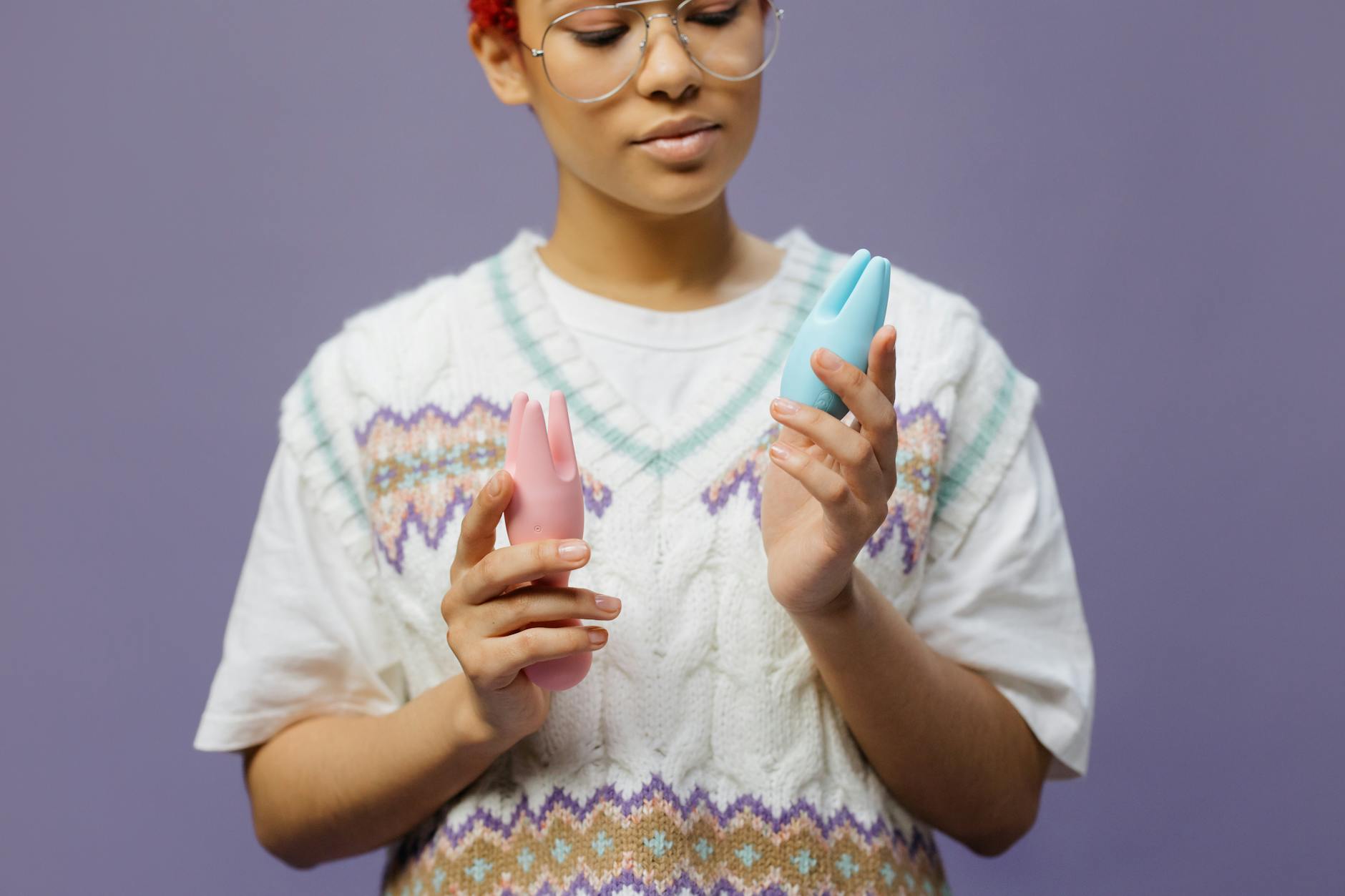
How hormones actually change what you feel
Here's the thing. Your hormones don't stop you from enjoying pleasure. They change the timing, the intensity, and the sensation of how you get there. Understanding that difference is the whole game.
When estrogen and progesterone shift, your tissue responds differently to touch. The blood flow to your genitals changes. The sensitivity of your clitoris fluctuates. Your pelvic floor tightens or relaxes depending on where you are in your cycle. These are real, measurable changes. And they're also completely workable. That's where lemon vibrators come in.
I've worked with hundreds of people navigating these shifts, and the pattern is always the same: once they understand what's happening, they stop fighting their body and start working with it.
What shifts during your cycle
Your menstrual cycle creates a predictable rhythm of hormonal peaks and dips. Each phase comes with its own pleasure signature.
Follicular phase (days 1-14). Estrogen is climbing. Your clitoris swells slightly, tissue becomes more elastic, and arousal typically builds faster. Many people find they need less warm-up time during this window. If you use lemon vibrators during your cycle, this is often when you'll feel the strongest response to the suction sensation. Your pelvic floor is generally more relaxed too, which means deeper, fuller orgasms feel more accessible.
Ovulation (day 14ish). This is your hormonal peak. Estrogen surges, testosterone spikes, and your desire often peaks alongside it. Clitoral sensitivity is at its highest. Some people find they're more responsive to stronger stimulation during this window. This is when even a gentle lemon sucker can feel intensely satisfying.
Luteal phase (days 15-28). Progesterone takes over. Your pelvic floor tightens slightly, arousal takes a bit longer to build, and you might need more sustained stimulation to reach orgasm. That's not a problem. It's just information. Many people find they prefer longer sessions with their clitoral vibrators during this phase. Some need to start at a lower intensity setting and build up.
Then menstruation arrives, and the cycle resets.
What doesn't change across your cycle
Your capacity for pleasure. Your nerve density. Your brain's ability to process sensation and reach orgasm. Your desire for connection, if you have it. These stay consistent.
The clitoris has about 8,000 nerve endings. That number doesn't fluctuate with your cycle. What fluctuates is blood flow to those nerves and the thickness of the tissue protecting them. You're not losing sensitivity. You're working with changing conditions, which is different.
That's why lemon vibrators work across all cycle phases. The suction mechanism doesn't rely on direct friction the way traditional vibrators do. Instead, it creates a gentle vacuum that stimulates the entire clitoral body, including the internal parts you can't see. That approach handles hormonal fluctuations beautifully because it's not fighting the tissue thickness or elasticity changes. It's working with them.
How birth control changes the equation
If you're on hormonal birth control, you don't have the same monthly peaks and dips. Your hormones stay relatively flat. For some people, this means consistent arousal patterns all month long. For others, it means lower overall desire, which is a real side effect that deserves to be taken seriously.
If you're on the pill and noticing your pleasure has dulled, that's not weakness. That's not you being broken. Hormonal birth control changes your neurotransmitter levels and your blood flow patterns. It's a trade-off. Some people find that swapping to a different formulation helps. Others find that lemon vibrators, with their gentle suction approach, work better than traditional vibrators because they don't require the same level of natural lubrication or arousal response to feel good.
The point: if your birth control is affecting your pleasure, talk to your doctor. There are options. And in the meantime, your tool choice matters.
What happens to arousal during perimenopause and menopause
Perimenopause (the 5-10 years before your final period) is when hormonal fluctuation gets wild. You might have weeks where your cycle is normal, then a month where everything goes sideways. Estrogen spikes and crashes unpredictably. Some days you feel like yourself. Other days you don't recognize your body's responses.
Then menopause arrives. Estrogen drops to a baseline and stays there. Your clitoral tissue becomes thinner. Lubrication decreases. Your pelvic floor loses some of its elasticity. Many people worry this is the end of pleasure. It's not. It's a transition.
Here's what I tell my clients: lemon vibrators often feel better after menopause, not worse. Because the suction mechanism doesn't create the kind of friction-based stimulation that can feel uncomfortable on thinner tissue. It's gentler. It's more focused. And honestly, many post-menopausal people report some of the most satisfying orgasms of their lives after they stop fighting these changes and start working with them.
Your arousal timeline might lengthen. Budget 20-30 minutes instead of 10. Your initial intensity might need to be lower. Start at pattern 1 and build. But your capacity for pleasure, for orgasm, for connection? That's still there.
Pregnancy and the postpartum window
During pregnancy, your estrogen and progesterone are both through the roof. Blood flow to your genitals increases dramatically. Many pregnant people experience heightened arousal and orgasms that feel stronger and more frequent than usual. This isn't universal, but it's common.
Some people find lemon vibrators feel incredible during pregnancy because the gentle suction doesn't put pressure on a tender pelvic floor. Others prefer not to use any toys. Both are fine.
Postpartum is different. Whether you delivered vaginally or via cesarean, your pelvic floor is healing. Your hormones crash after the placenta delivers. If you're breastfeeding, your estrogen stays suppressed, which means tissue thinning similar to menopause. Desire often tanks. Arousal takes longer. Pain can show up where there was none before.
This is where patience and the right tools matter. Lemon vibrators work better for sensitive tissue partly because they don't require the same friction-based stimulation. But also, don't rush yourself. Your body just did something enormous. Give it time.
Stress, cortisol, and what that does to arousal
Here's a hormone nobody talks about enough: cortisol. When you're stressed, your cortisol climbs. This suppresses estrogen and testosterone. Your body literally deprioritizes pleasure in favor of survival. Your arousal slows down. Your tissue response changes. Your pelvic floor tightens.
Stress is a hormonal state just like your cycle is. And lemon vibrators feel better during stress partly because they require less of your nervous system to start with. They're gentler. They build slowly. They don't demand you be in a particular state of readiness.
If you're dealing with chronic stress, your hormonal landscape is literally changed until you're not. That's not a personal failing. That's biology. Work with it.
What actually helps across hormonal shifts
Three things that work regardless of where you are in your cycle, your life stage, or your stress level.
Water-based lubricant, always. Hormonal fluctuations change natural lubrication. Using lube isn't a sign something's wrong. It's a tool that lets you feel good without friction. Silicone lubes feel richer but damage silicone toys, so stick with water-based.
Warm-up time that matches your phase. During high-estrogen phases, 10-15 minutes might be enough. During low-estrogen phases (late luteal, postpartum, menopause), budget 20-30 minutes. This isn't laziness. This is respecting how your body works right now.
Lower starting intensity than you think you need. When tissue is thinner or less elastic, aggressive stimulation can feel uncomfortable. Lemon vibrators let you start at pattern 1 and build. Traditional vibrators often don't have that range.
The emotional piece nobody mentions
Hormones don't just change your body. They change your mood, your confidence, your patience with yourself. During high-estrogen phases, you might feel sexy and open. During low-estrogen phases, you might feel disconnected from your body. Both are hormonal. Neither is your fault.
Many of my clients find that self-compassion matters more during these shifts than any physical tool. You're not broken when arousal takes longer. You're not failing when you need more lube. You're not wrong when your pleasure feels different than it did last month.
If you have a partner, this is where communication saves everything. "My body is responding differently right now" is a complete sentence. It doesn't need to be a problem you solve together. It can just be information.
People also ask
Q: Do lemon vibrators work the same way during every part of my cycle?
Not exactly. During high-estrogen phases, you'll likely feel a stronger response more quickly. During low-estrogen phases, you might need to start at a lower intensity or use more lubricant. The suction mechanism of lemon clitoral vibrators adapts well to these shifts because it doesn't rely on friction. But your experience will vary depending on tissue thickness, blood flow, and arousal readiness.
Q: Can hormonal birth control affect how much pleasure I feel with lemon vibrators?
Yes. Birth control flattens your hormone levels, which can dampen desire and arousal for some people. If you're on the pill and noticing reduced pleasure, talk to your doctor about alternatives. In the meantime, lemon vibrators often work well because they require less natural arousal response to feel satisfying. You might also benefit from longer warm-up time and more deliberate focus.
Q: What's the best lemon vibrator to use during pregnancy?
Any lemon vibrator is safe during pregnancy if you want to use one. The Lemon clitoral vibrator is designed for gentle stimulation and works well when you want a lower-intensity experience. But many pregnant people skip toys entirely during this phase. What matters most is what feels right for your body right now.
Q: Does menopause really reduce pleasure, or is it just about lubrication?
It's not just lubrication. Tissue does become thinner, arousal takes longer, and orgasms can feel different. But these aren't deficits. They're changes. Many people report their most satisfying orgasms come after menopause, when they've stopped fighting their body and started working with it. Lemon vibrators handle this transition well because they're gentler and don't require the same friction-based approach.
Q: How long should I warm up if my hormones are making arousal slower?
Generally, 20-30 minutes if you're in a low-estrogen phase. This isn't excessive. This is just honest about how your nervous system works right now. Shorter phases might need 10-15 minutes. Pay attention to your own patterns across your cycle and adjust accordingly.
Q: Is it normal for my pleasure to feel different every month?
Completely normal. Your hormone levels create predictable rhythm, and your body's response to stimulation follows that rhythm. You're not broken or inconsistent. You're just cycling. Once you understand your own pattern, you can work with it instead of fighting it.
The bottom line
Your hormones change constantly. Your cycle, your life stage, your stress level, your birth control. all of these shift how your body responds to touch. That's not a limitation. That's information.
Lemon vibrators work so well across hormonal shifts because they don't fight tissue changes or arousal fluctuations. They work with them. That's the whole design.
If you're noticing changes in how pleasure feels, you're not broken. You're paying attention. Start by tracking your own patterns across a few cycles. Notice when arousal comes faster, when you need more time, when intensity matters and when gentleness does. That awareness is your most useful tool.
And if something feels painful or wrong, see a doctor. Genitourinary syndrome of menopause, hormonal imbalances, and other treatable conditions are real. But most of the time, the shifts you're feeling are just your body doing what bodies do across their lifespan. Work with it, be patient with it, and give yourself permission to explore what feels good right now, in this season.