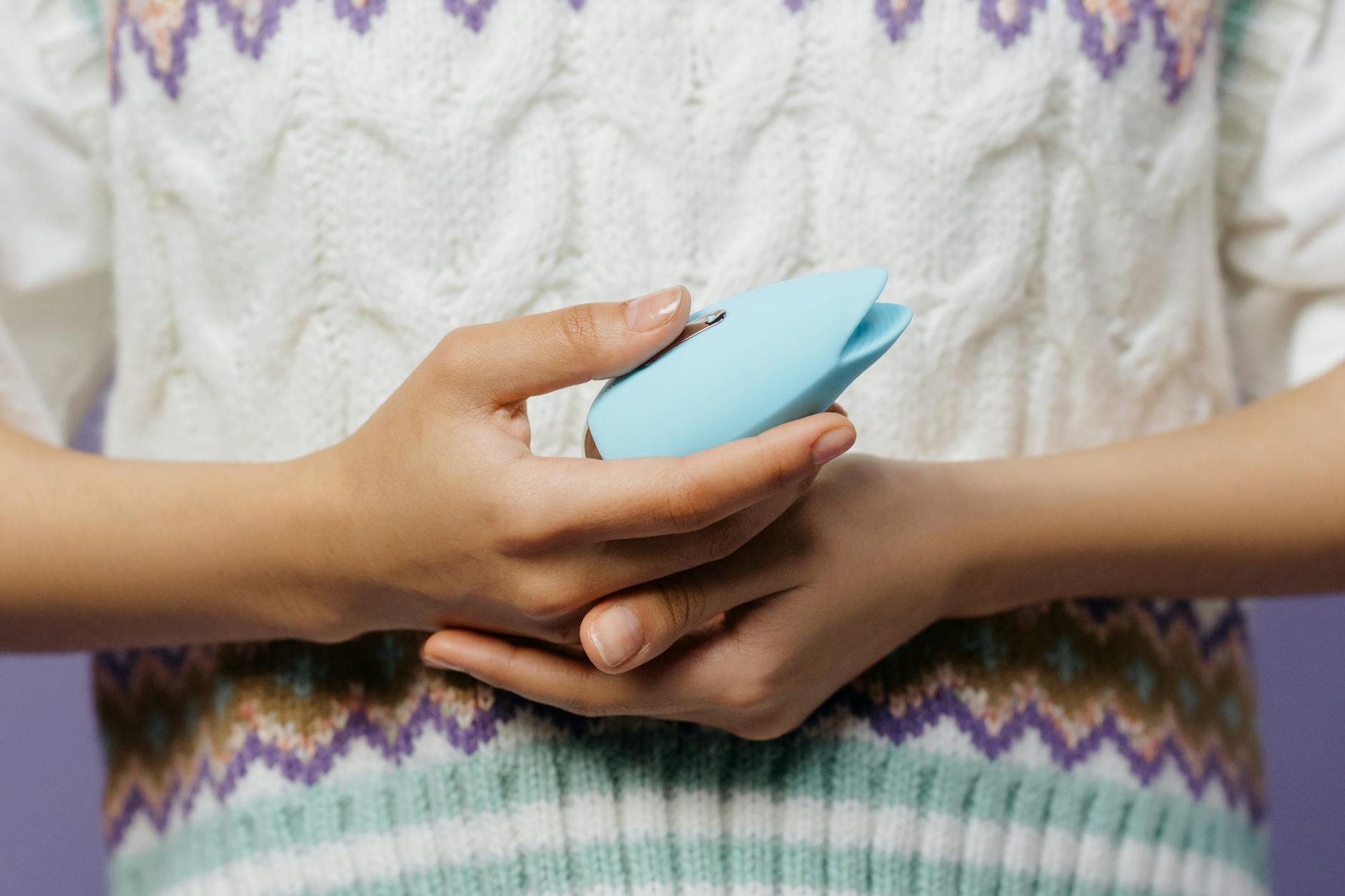
Let's be real about the shame piece
You want pleasure. You also want to want it without feeling like you're doing something wrong. Those two things shouldn't be in conflict, but for most people they are. That conflict isn't about the lemon vibrators themselves. It's about what you've absorbed about your right to have pleasure at all.
I've worked with hundreds of people who describe nearly identical feelings: excitement mixed with guilt, desire mixed with the sense that they're being selfish or unfeminine or too much. Some of that comes from religion or family messaging. Some comes from partners who've made pleasure feel like a negotiation. A lot of it just comes from living in a world that tells women to be desirable but not desirous. To attract pleasure, not seek it.
Using lemon clitoral vibrators when you're carrying shame isn't just about technique. It's about consciously building a different story about what your pleasure means.
Why shame shows up alongside desire
Shame isn't random. It's usually a response to a specific message you internalized early, often so early you don't remember receiving it. The message might have been explicit: "Good girls don't touch themselves." Or implicit: watching an adult's face change when pleasure was mentioned, or noticing which body parts could be discussed and which couldn't.
The tricky part is that shame doesn't disappear just because you're an adult who logically knows your body belongs to you. It lives in your nervous system. It shows up as hesitation before you touch yourself. It disguises itself as practical concerns: worry about noise, about your partner finding out, about whether you deserve the time, about whether wanting this makes you unusual or broken.
Here's what I know from decades of clinical work: shame thrives on silence. The moment you name what's happening, it loses some of its power.
The three-part framework for reclaiming pleasure
Part one: permission audit.
Before you even touch a lemon vibrator, get curious about where the resistance lives. Is it a belief that pleasure is selfish? That good partners don't need external stimulation? That orgasms should only happen a certain way? Write down the actual sentences running in your head. Don't try to argue with them yet. Just notice them.
Then ask yourself: who taught me this? Was it something I decided, or something I inherited? There's a huge difference between "I've considered the evidence and I don't want frequent orgasms" (valid) and "I feel ashamed when I want them" (shame, not choice).
Part two: separate the sensations from the story.
Shame lives in narrative. The sensation of a clitoral vibrator is just sensation. The story you tell about what that sensation means is different. When you use a lemon vibrator and feel guilt, that guilt is not proof you're doing something wrong. It's proof you're carrying an old message.
Try this: the next time you're using one and the shame shows up, pause. Name the physical sensation: warmth, pressure, building intensity, or whatever you feel. Then name the story: "I feel like this is wrong" or "I feel like I'm being selfish." Notice they're separate. The sensation is neutral. The story is what has weight.
Part three: build evidence.
Your nervous system doesn't believe arguments. It believes patterns. Every time you prioritize your pleasure without catastrophe, you're building new neural pathways. Every time you use a clitoral vibrator and don't lose your job or your relationship or your worth, your body learns that this is safe.
This doesn't mean forcing yourself to feel okay. It means doing the thing anyway, even scared, and paying attention to the fact that nothing bad happened.
What actually changes when you start using lemon vibrators guilt-free
People often expect that removing shame will make them want sex more, or feel more pleasure in their body. Sometimes it does. But more often, what happens first is permission to notice what you actually want instead of what you think you should want.
You might discover you want lemon vibrators way more than penetration. You might find that you want them alone, not with a partner. You might realize that your pleasure cycles differently than you thought. None of these are problems. They're information.
The physical part gets easier too. When your nervous system isn't partly occupied with shame, your body can actually relax into sensation. The clitoral vibrator's suction function, which works so well on sensitive tissue, becomes something your body can receive instead of something you're braced against.
How to talk to a partner if you're worried about judgment
If you live with or regularly sleep with someone, this conversation will eventually matter. Here's the thing: people who judge you for wanting pleasure are showing you something important about your relationship. Not everyone deserves access to that information.
If you think your partner is trustworthy, the conversation doesn't have to be a big reveal. It can be as simple as: "I want to prioritize my pleasure more. I'm going to be using tools that help me do that. This isn't about you." If they respond defensively, that's data worth examining with someone like me in therapy, not data that means your pleasure is wrong.
If you're not ready to tell them, that's also information. That lack of safety matters. It might mean the relationship needs work. It might mean you need more time. But whichever it is, the solution isn't hiding your pleasure. It's addressing why hiding feels necessary.
When shame is actually a deeper issue
Sometimes guilt about pleasure points to deeper relationship or trauma work that needs to happen. If you freeze when you try to use a clitoral vibrator, or if the guilt is so intense that you can't follow through even when you want to, that's not about not trying hard enough. That's your nervous system signaling that something needs attention.
Working with a therapist who understands both sexuality and trauma is worth the investment. Feeling disconnected from your body after trauma is a real and common experience, and it's one where professional support genuinely transforms what's possible.
The plot twist about judgment
Here's what I've learned: the judgment you're most afraid of isn't usually coming from other people. It's coming from yourself. You've internalized the critical voice so thoroughly that you believe it's objective truth.
Your body deserves pleasure. Not because you've earned it or because you're a certain type of person, but because you have a nervous system, and that system is designed to feel good. Using lemon sexual toys to access that is not selfish. It's not shameful. It's basic self-care.
Start there. Everything else follows.
People also ask
Is it normal to feel guilty using clitoral vibrators alone?
Completely normal. Guilt about solo pleasure is one of the most common things I hear about in my practice. It usually traces back to messages about sexuality being relational or performance-based, which is why it can feel transgressive to access pleasure on your terms. The guilt itself is normal. Acting on the pleasure anyway is what breaks the pattern.
How do I use a lemon vibrator without feeling ashamed?
Start by identifying the specific belief creating the shame. Is it "I shouldn't need this"? "Good partners don't require external stimulation"? "My pleasure is less important than my partner's"? Once you name the belief, you can question it. Then use the vibrator anyway, in small ways if that helps, and pay attention to the fact that the feared consequence doesn't materialize. Your nervous system learns through repetition.
What if my partner judges me for using lemon sexual toys?
That's a sign that the relationship dynamic around desire and autonomy needs examination. You could try one conversation: "My pleasure matters to me, and I'm going to prioritize it. I'd like your support." If that doesn't land, individual therapy or couples work might help clarify whether this is a communication gap or a fundamental incompatibility. Either way, your pleasure isn't the problem.
Does using adult toys make me dependent on them?
No. Dependence would mean you can't function without them, which isn't how bodies work. What sometimes happens is that you discover you genuinely prefer clitoral vibrators because they work better for your anatomy. That's not dependence. That's information about what your body needs. Some people find that using a lemon vibrator helps them orgasm with a partner too, because they've learned what works and can communicate that.
How do I explain using lemon vibrators to someone judgmental?
You don't owe an explanation to someone who's already decided you're wrong. If it's someone whose relationship you care about, you might try: "I'm prioritizing my sexual health and pleasure. I'm not interested in debating whether that's valid." Then hold the boundary. If they keep pushing, that's their issue, not yours.
Can lemon clitoral vibrators help if I feel numb during sex?
Sometimes, yes. If numbness is part of a larger pattern of disconnection or tension, a clitoral vibrator can help your nervous system wake up to sensation. When you feel numb during sex with a partner, solo exploration with a vibrator can actually help you build the arousal and confidence to bring that aliveness back to partnered sex too.
The only judgment that matters
Your pleasure is yours. The judgment you're carrying probably isn't even yours either. It belongs to a voice you internalized so early that it feels like truth.
Start by questioning it. Then by acting anyway. Then by paying attention to what happens when you do. I'd bet the outcome is different from what the shame has been predicting.
If you want to explore this further or if the shame is deeper than shame, reach out. This is exactly the kind of work I do.