Let's start with what's really going on
You know the feeling. Your body is responsive, maybe even eager. You have time, privacy, all the ingredients for solo sex. But your mind is somewhere else. There's no spark of wanting it, no imaginative pull, no sense that pleasure matters right now. You can have an orgasm. You might want one. But desire itself, the active interest in the experience, feels absent.
This disconnect between physical capacity and actual want is more common than you'd think, and it's not a sign that something is broken.
Why desire and arousal come apart
Desire and arousal are not the same system. This matters because solo sex is one of the few times you might notice the difference starkly.
Arousal is physiological. It's what your body does. Blood flow, lubrication, nerve activation. It can happen independently of desire. Desire is the wanting part. It's cognitive and emotional. It includes interest, curiosity, anticipation.
When you're alone, there's no external stimulus triggering arousal. No partner, no social momentum, no context saying "now is the time." You have to generate both desire and arousal internally. If you're tired, stressed, or emotionally checked out, desire often disappears first. Arousal capacity might still be there, but it feels pointless.
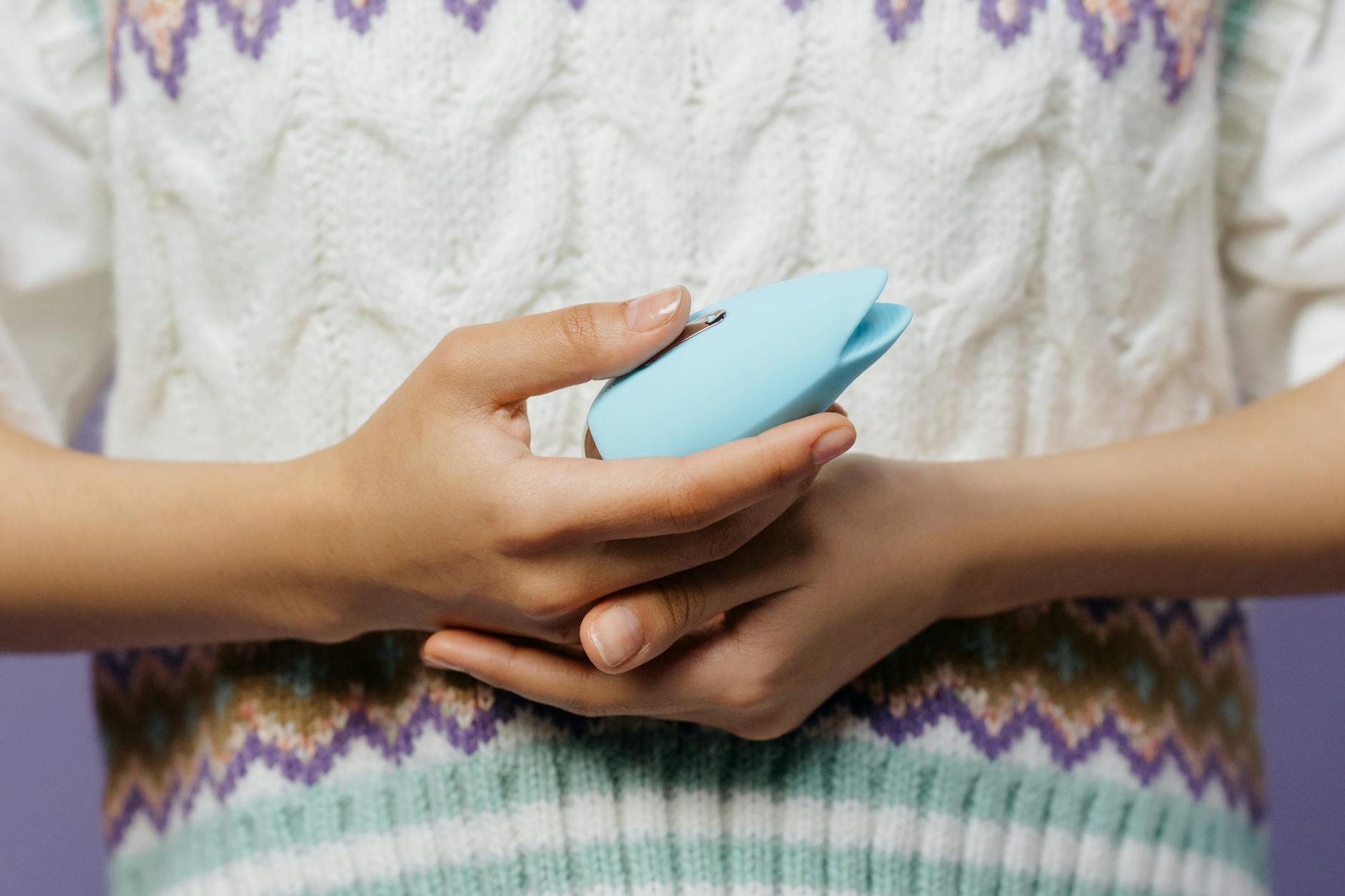
 Photo by Ihsan Adityawarman on Pexels
Think of it this way: you can feel hungry for ice cream on a hot day. You can also have the physical capacity to eat without actually wanting dessert. Solo sex works the same way.
What actually happens to desire
Desire is fragile. It depends on several things working together.
First, there's novelty. If masturbation has become routine, your brain stops paying attention. You're doing the same motion, the same position, the same thoughts or videos you've used for years. Your nervous system gets bored before your body does.
Second, there's attention. Desire requires you to be mentally present. If you're scrolling, thinking about emails, or half-watching something, desire won't show up. It needs your actual focus.
Third, there's permission. Guilt, shame, or a nagging sense that you "should" be doing something else kills desire at the root. You might be able to push through to an orgasm, but you won't want it.
Finally, there's context. If sex feels like a chore, another item on your to-do list, desire stalls. It needs to feel like a choice, not an obligation.
How lemon clitoral vibrators help rewire the connection
A good clitoral vibrator like the lemon suction-style design doesn't force desire. But it does three things that help rebuild it.
1. It breaks the routine. Switching from your hand to a lemon vibrator introduces novelty. Your nervous system wakes up because something is different. New sensation captures attention, which is the first step back to desire.
2. It lowers the barrier. You don't have to "work" as hard. With your hand, you're managing pressure, rhythm, and endurance all at once. A lemon clitoral vibrator handles the mechanics. This means you can focus on what you're feeling and thinking instead of how tired your hand is. Desire shows up more easily when you're not fatigued.
3. It creates a ritual. Pulling out a specific toy, charging it, setting it down, adjusting position. These small steps signal to your brain that this is different from other parts of your day. You're moving into a dedicated space for pleasure. That containment and intentionality actually activates desire.
The actual practices that work
You can't fake desire. But you can create the conditions for it to return.
Start with a real choice, not a schedule. Don't set aside "Thursday nights for masturbation." That makes it an obligation. Instead, notice when you have a small window of genuine interest. Even 10 minutes. The key is choosing it in the moment, not enforcing it on a calendar.
Clear the mental space first. This sounds woo but it's not. Before you reach for a lemon vibrator, spend two minutes doing something that pulls you into the present. A short shower. A few minutes with a book. A walk. Something that says "I'm closing the previous task." This shift is what allows desire to surface.
Use the toy to explore, not to achieve. The moment you frame it as "I need to come," you've invited performance pressure. Instead, start with the toy on low and just notice what happens. Does one sensation feel better than another? Do you prefer it in one position over another? Turn the goal from orgasm to discovery. Desire follows curiosity.
Pay attention to what you're thinking about, or whether you're thinking at all. Some people need mental imagery or fantasy. Others need their mind completely clear and focused on physical sensation. Neither is right. But solo pleasure feels connected to desire when your mental life matches what your body needs. If you usually think about nothing but you're trying to narrate a fantasy, the disconnect will show up. Pay attention to what naturally pulls you in.
Let orgasm be optional. The permission to skip the ending is weirdly powerful. If you know you can stop whenever and it's fine, you relax. Relaxation and desire go together. You're also more likely to reach orgasm paradoxically, because you're not chasing it.
When you use a lemon clitoral vibrator in this frame, you're not forcing anything. You're creating a low-pressure space where desire can return on its own timeline.
The difference between disconnection and disinterest
Sometimes solo pleasure feels disconnected because the conditions aren't right. Sometimes it stays distant because you've genuinely lost interest in solo sex altogether.
One is fixable with novelty, attention, and permission. The other is a shift in your sexuality itself, which is fine. Not everyone wants to masturbate forever. Some people's solo pleasure needs change across their lifespan. That's not dysfunction.
But if you used to enjoy solo sex and you don't anymore, it's worth asking whether the disconnect is situational (stress, exhaustion, life context) or deeper (a genuine shift in what you want). A lemon vibrator helps with the first one. For the second, you might need a different conversation entirely.
Why this matters more than you think
Solo pleasure is where you learn about yourself without external pressure. It's the space where you figure out what you actually want, separate from what you think you should want.
When that space feels disconnected, you lose access to that information. You can't learn your own patterns. You can't practice desire or arousal independently. You're more likely to rely entirely on partners to activate pleasure, which puts you in a dependent position.
Rebuildng that solo connection, even imperfectly, means you own your pleasure again. You're not waiting for someone else to create the conditions. You're creating them yourself.
Frequently asked questions
How do I know if it's disconnection or just low libido?
Disconnection feels like a split. Your body can respond but your mind isn't there. Low libido feels flat overall. You're not drawn to solo sex, partnered sex, or much else. If your interest in sex in general has dropped, a toy won't fix it. Talk to a doctor or therapist. If your interest is selective, just solo pleasure feels off, then you're probably dealing with disconnection, not low libido. Try rebuilding that solo space and see what happens.
Can lemon vibrators create dependency for orgasm?
Not really. A good clitoral vibrator is a tool that amplifies sensation. Using it doesn't rewire your body to need it. You can orgasm with your hand after using a vibrator. People worry about this, but the research doesn't support it. What can happen is that you prefer the vibrator because it feels better. That's fine. Preference isn't dependency.
What if I feel guilty about solo pleasure?
Guilt is the quickest way to kill desire. If you were raised with shame around masturbation, you might carry that forward even if you logically know it's fine. That's worth talking through with a therapist. But practically speaking, the permission piece matters. You can use a lemon vibrator as a way of saying to yourself, "This is real. This is mine. This is allowed." The ritual of getting it out, using it, putting it away can be a way of claiming that space as legitimate.
How long before desire reconnects?
It depends. If you're just bored with routine, trying a new toy might shift things in a few sessions. If the disconnection comes from stress or exhaustion, it might take a few weeks of actually resting and caring for yourself before desire returns. If it's layered with guilt or relational stuff, longer. There's no timeline. Just notice whether things are shifting or stuck, and adjust based on that.
Is it normal to prefer toys over your hands?
Completely normal. A lemon clitoral vibrator stimulates tissue in a way your hand can't. It provides consistent sensation without fatigue. If it feels better, it feels better. That doesn't mean there's anything wrong with your body. It means the tool is doing what it's designed to do.
What if solo pleasure still feels disconnected after trying these things?
Then something deeper might be at play. Sometimes disconnection points to depression, relationship stress, burnout, or a shift in your sexuality. A therapist who specializes in sex or relationships can help you figure out what's actually going on. A lemon vibrator helps when the issue is novelty and mechanical. It doesn't fix everything. Know the difference.
The real work is reconnection, not perfection
You don't need to have perfect desire or earth-shattering orgasms. You just need to trust yourself enough to explore what you actually want. When solo pleasure feels disconnected, a tool like a lemon clitoral vibrator can help you step back into that curiosity.
Start small. Notice what shifts. Let desire return at its own pace. And remember that wanting to reconnect with solo pleasure is already the hardest part. The rest is just patience and permission.