How to Use Lemon Vibrators When Pleasure Feels Different After Hormonal Changes
Honestly, this one's important. Hormonal shifts change pleasure. They do not end it. But the messaging you get usually lands in one of two equally unhelpful places: either "everything stops working" or "it's totally fine, nothing changes." Both are wrong, and both leave you confused about what's actually happening to your body.
Let me be clear about the physics first, because it matters.
What hormonal shifts actually do to sensation
Estrogen affects tissue thickness. When it drops, the vaginal and vulvar tissue becomes thinner and less elastic. This changes lubrication, changes how quickly arousal builds, and changes which types of stimulation feel good versus uncomfortable. Testosterone also drops (yes, people with ovaries produce testosterone, and it's a major player in desire). That affects sensation too.
The pelvic floor loses some of its estrogen support, which can shift how orgasms feel. Sometimes shallower, sometimes more concentrated in one spot, sometimes just different enough that you wonder if you're doing this wrong. You're not.
Here's what does NOT change:
Your clitoral nerve density stays the same. The neural pathways for arousal don't disappear. Your capacity for pleasure doesn't vanish. You can still orgasm, often intensely. The brain's ability to find pleasure is still there.
I've worked with many clients who report their most satisfying orgasms came after their hormonal landscape shifted. This isn't performance encouragement. It's a clinical pattern I see repeatedly.
Why a lemon vibrator works differently now
Lemon clitoral vibrators rely on suction and gentle pulsing rather than direct friction. This matters when tissue is thinner or more sensitive. A traditional vibrator often creates too much direct pressure on tissue that's now more vulnerable to overstimulation. A suction vibrator like the Lem bypasses that entirely.
Suction stimulates the nerve clusters without the same mechanical friction. For bodies navigating hormonal changes, this is actually ideal. You get sensation without the risk of rawness or that pinching feeling that makes you want to stop halfway through.
The pattern settings also help here. You can start at a gentler pulse and work up, rather than jumping into intensity levels that feel jarring on tissue that's adjusted its response time.
Physiological shifts and what they mean practically
When estrogen drops, three things happen that affect how you use any adult toy, including lemon sexual toys:
Arousal takes longer to build. This isn't laziness or disinterest. It's a physiological reality. Your body needs more time to get blood flowing, tissues to warm up, and the arousal cascade to kick in. Budget 15-25 minutes instead of 5. This isn't a problem; it's information.
Lubrication changes. Your body might produce less natural lubrication, or the timing shifts. This doesn't mean you're broken. It means water-based lubricant becomes your friend. Always. Not because you're dried up, but because thinner tissue benefits from the buffer. Silicone lube feels luxurious, but silicone toys plus silicone lube can damage the toy. Stick with water-based.
Intensity tolerance shifts. What felt perfect at pattern 5 might now feel too much, especially early in a session. Start at levels 1-3 on your lemon vibrator and build. Your tissues will thank you, and you'll often find that slower build-up creates more satisfying orgasms anyway.
How to adjust your technique with lemon sexual toys
Here's what I recommend to almost every client working with hormonal changes:
Start slower than you think you need to. Seriously. The first few minutes should feel almost underwhelming. That's correct. You're priming the pump, not sprinting.
Warm up your pelvic floor gently. Kegels are fine, but their opposite matters too. Learning to relax the pelvic floor fully actually becomes harder when estrogen drops. Spend a minute consciously relaxing before you start. Breathe into it. This changes the game.
Pay attention to where you place the toy. Thinner tissue means the entire clitoral area is more sensitive. Some people find that positioning the lemon vibrator slightly off to the side of the clitoris feels better than direct contact. Others prefer broader coverage. There's no right answer. You get to experiment.
Use the time. If how to use lemon vibrators when arousal takes longer as you age resonates, you already know that extended warm-up isn't a setback. It's a feature. Give yourself permission to spend 20 minutes on foreplay and feel satisfied about it.
The emotional piece that nobody talks about
Hormonal shifts often arrive bundled with other midlife changes. Kids leaving home. Relationship recalibrations. Career shifts. Sometimes grief. The temptation is to assume any change in pleasure is purely hormonal. Sometimes it is. Often it's something else wearing a hormonal disguise.
If you're partnered, the single most valuable thing you can do is separate two conversations. "My body is responding differently" is different from "I want us to reconnect." Blending them into one conversation turns both into dead ends.
If you're solo, hormonal shifts can feel like a loss of something you took for granted. That's real. Spending time relearning your own pleasure isn't a waste. It's necessary recalibration. Your body is asking for slightly different input. That's not failure. That's adaptation.
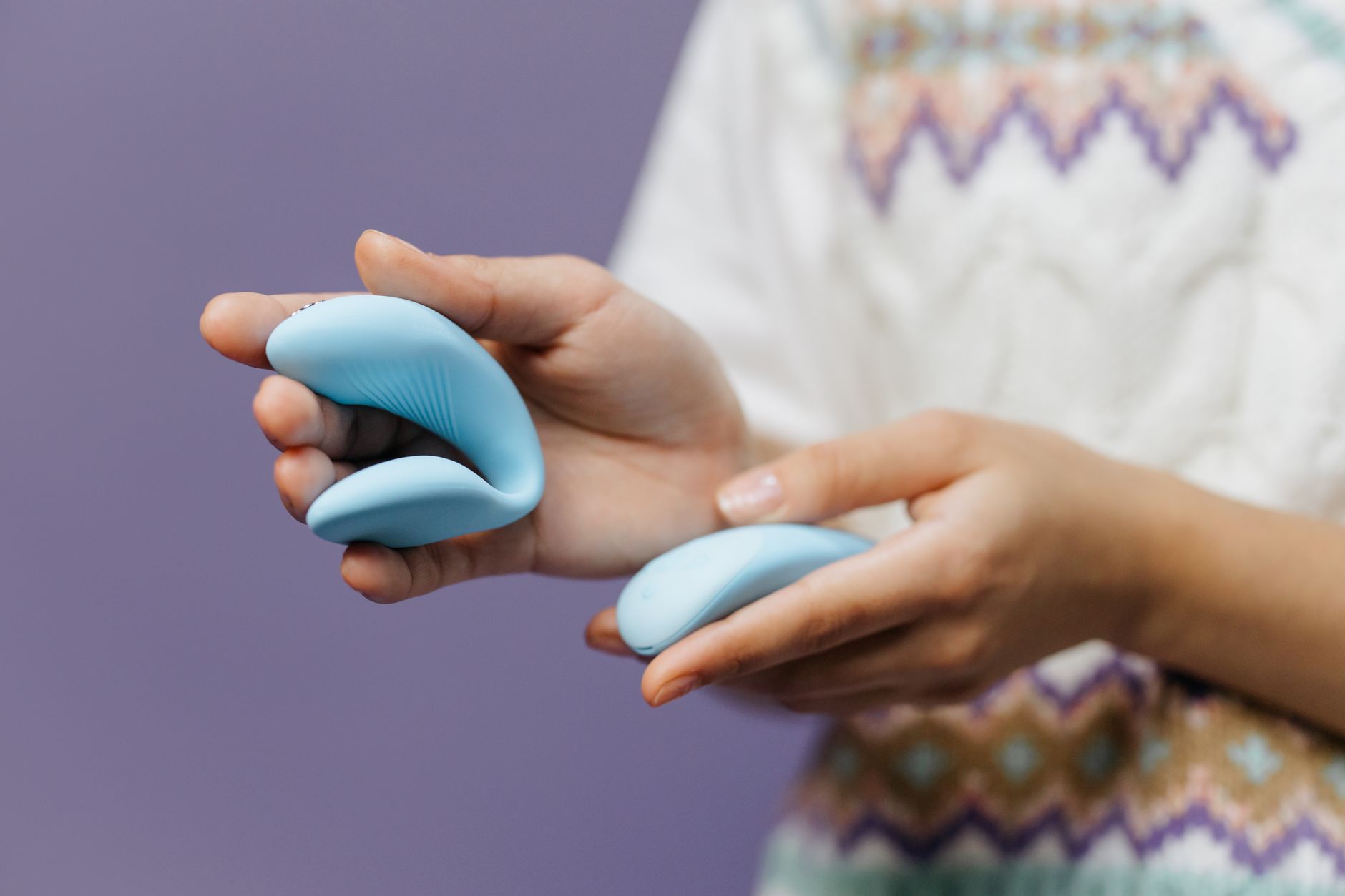
Photo by cottonbro studio on Pexels
When to adjust beyond technique
If pain shows up during sex, don't wait to address it. Genitourinary syndrome (GSM) is real, treatable, and common. Often a topical estrogen cream handles it in weeks with minimal systemic absorption. A menopause-trained GP or gynecologist can be genuinely transformative here.
If desire has completely evaporated and isn't returning with time or reconnection, testosterone therapy is worth discussing with a provider who specializes in this. It's more conservative in some regions than others, but it's available and often life-changing for the right person.
If numbness or disconnection persists despite trying different approaches with lemon clitoral vibrators, that's worth investigating too. Sometimes it's hormonal. Sometimes it's medication-related. Sometimes it's something else entirely. When sensation returns after months of numbness can be surprisingly complex.
The reframe that matters
Most of what you learned about your own pleasure was built on one hormonal reality. That reality has shifted. You're not starting from zero. You're starting with experience and adaptation.
Some people find that hormonal changes actually unlock better pleasure. Less performance pressure. More mental space. Better communication with partners. Permission to slow down and actually feel things instead of chasing sensation. The research backs this up repeatedly.
Lemon vibrators work well with this shift because they let you control intensity gradually, they don't require the same kind of direct friction, and they give you back agency over the pace. That's not a consolation prize. That's the actual advantage.
Your body hasn't stopped being capable of pleasure. It's just asking for slightly different conditions. That's not a setback. That's information.
FAQ: Hormonal Changes and Using Clitoral Vibrators
How long does it take to feel pleasure return after hormonal shifts?
It depends on what shifted. If it's perimenopause, changes might happen gradually over months. If it's medication-related, sometimes weeks. If it's postpartum, longer. The pattern I see most often is that sensation starts returning within 2-3 weeks of consistent, patient use of the right tool. A lemon clitoral vibrator helps accelerate that because it doesn't require the same tissue response as friction-based stimulation. Be patient with the timeline. Your nervous system needs time to recalibrate.
Can I still use lemon sexual toys if I have vulva sensitivity?
Absolutely, actually yes. That's partly why lemon vibrators work better than many alternatives during hormonal shifts. The suction mechanism bypasses the direct friction that aggravates sensitive tissue. Start with lower intensity levels and longer warm-up time. Many people with significant sensitivity find that the Lem is the only toy that doesn't create irritation or that pinching sensation. Sensitivity isn't a stop sign. It's a signal to adjust your approach.
Does water-based lubricant work with all lemon sexual toys?
Yes. Water-based lube is safe with silicone toys and is actually required if your tissue is thinner or more delicate. Silicone-based lubes feel richer but can break down silicone toys over time. If you're navigating hormonal changes, water-based is genuinely your best option anyway because it's easier to wash off if sensation becomes overwhelming and you need to pause.
How do I know if what I'm experiencing is hormonal or something else?
If the shift was sudden and aligned with a known hormonal event (starting hormonal birth control, beginning perimenopause, postpartum, starting a new medication), it's likely hormonal. If it's gradual, disconnected from any obvious trigger, or accompanied by pain or numbness beyond the normal shift, see a provider. Sometimes pleasure changes align with emotional distance from a partner too. Separate the conversations. That usually clarifies which factor is at play.
Can I use lemon clitoral vibrators with a partner if my arousal feels disconnected?
Yes, and actually this is one of the most common uses. When your partner initiates but arousal takes time, a clitoral vibrator gives you a tool to get there without pressure. It lets your partner participate in your pleasure without making them wait passively. Many couples find this actually improves intimacy because it removes the performance pressure.
What intensity level should I start at with a lemon vibrator after hormonal changes?
Always start at level 1 or 2. I know that feels boring. That's the point. Your nervous system needs time to warm up. Most people find that starting low and building creates better sensation anyway. You're not leaving intensity on the table. You're building toward it sustainably. By the end of a session, you'll often find yourself at higher levels naturally as arousal builds. That progression feels infinitely better than jumping to 5 and backing off because it's too much.
What happens next
Hormonal changes aren't the end of your sexual life. They're often the beginning of a different chapter. What's different sometimes turns out to be better. Better because it's slower, more intentional, less performative, and more actually pleasurable.
Your body hasn't stopped being capable. It's asked for different conditions. Lemon vibrators meet those conditions. That's not a compromise. That's a match.
If this resonates and you want to explore further, reach out. Or start with what you know. Adjust your pace. Give yourself permission to relearn. Your pleasure matters. Your body's adaptation is telling you something worth listening to.