
Let's name the actual problem
Here's the thing: your partner touches you, kisses you, signals they want sex. You're not opposed. You're just not there yet. Your body runs on a different timeline. Five to ten minutes in, they're ready. You're still in the warm-up phase, nowhere near the arousal threshold where sex actually feels good.
So you have three choices. Rush it and feel mediocre. Say no and create tension. Or use those first few minutes differently.
The arousal gap is real (and it's not your fault)
Research on sexual response shows that partners with vulvas typically need 15 to 20 minutes of stimulation to reach full arousal, while partners with penises often get there in 2 to 5 minutes. That's not a defect. That's biology.
But here's what happens in a lot of long-term relationships. The partner with the penis initiates. They're ready. They want you to be ready. Instead of solving for the timing difference, couples either pretend it doesn't exist or one person feels blamed.
Adding a lemon clitoral vibrator into that opening window changes the entire dynamic. You're not stalling. You're both actively working toward the same goal, together.
Why the timing gap actually wrecks good sex
When your partner wants to enter before you're fully aroused, a few things happen. First, sex feels less intense for you physically. Second, you spend the first five minutes catching up mentally instead of being present. Third, over time, you start to resent the initiation because you know it means you'll be playing catch-up.
The resentment is the real damage. It's not about the sex itself. It's about feeling like your body's pace doesn't matter.
A lemon vibrator solves this by making your warm-up time communal. Your partner can touch you, kiss you, hold you while you use the Lem. They're not waiting for you to magically shift into gear. They're participating in getting you there.
How to frame it with your partner
Don't start with "I need more time." Start with "I want this to feel amazing for both of us." Then offer the practical solution: "The first ten minutes work better for me when I use a clitoral vibrator. That way I'm actually ready when you are, and we both feel better."
Most partners respond well to this because it's not a criticism. It's a tool that serves both of you. You get to arousal faster. They get a partner who's fully present instead of playing catch-up. Everyone wins.
If your partner gets defensive, that's a different conversation. But most people who love you will appreciate honesty about what your body needs.
The practical setup that works
Water-based lubricant first. Even if you generate natural lubrication, the lube makes the vibrator feel smoother and faster, which speeds up arousal.
Start on pattern one or two on the Lem vibrator. You're not going for the finish line yet. You're just waking up your nerves. Let your partner touch you, kiss your neck, hold you while you use it.
After about eight to ten minutes, you'll feel the shift. Your body will be warm. Your breathing will change. You'll feel the difference between neutral and engaged.
At that point, you have options. Keep using the vibrator while your partner enters. Switch to partnered touch. Stop and move into what feels right. There's no script.
The psychological part (which matters more)
Knowing you have a tool that closes the gap changes how you feel about initiation. Instead of bracing for the timing mismatch, you can relax into the beginning. Your partner gets to initiate without creating tension. You get to actually build arousal instead of faking it.
This is especially powerful if you've spent years managing your partner's disappointment around your slower arousal. A lemon clitoral vibrator isn't a fix for a broken body. It's a practical solution that lets both of you stop pretending the gap doesn't exist.
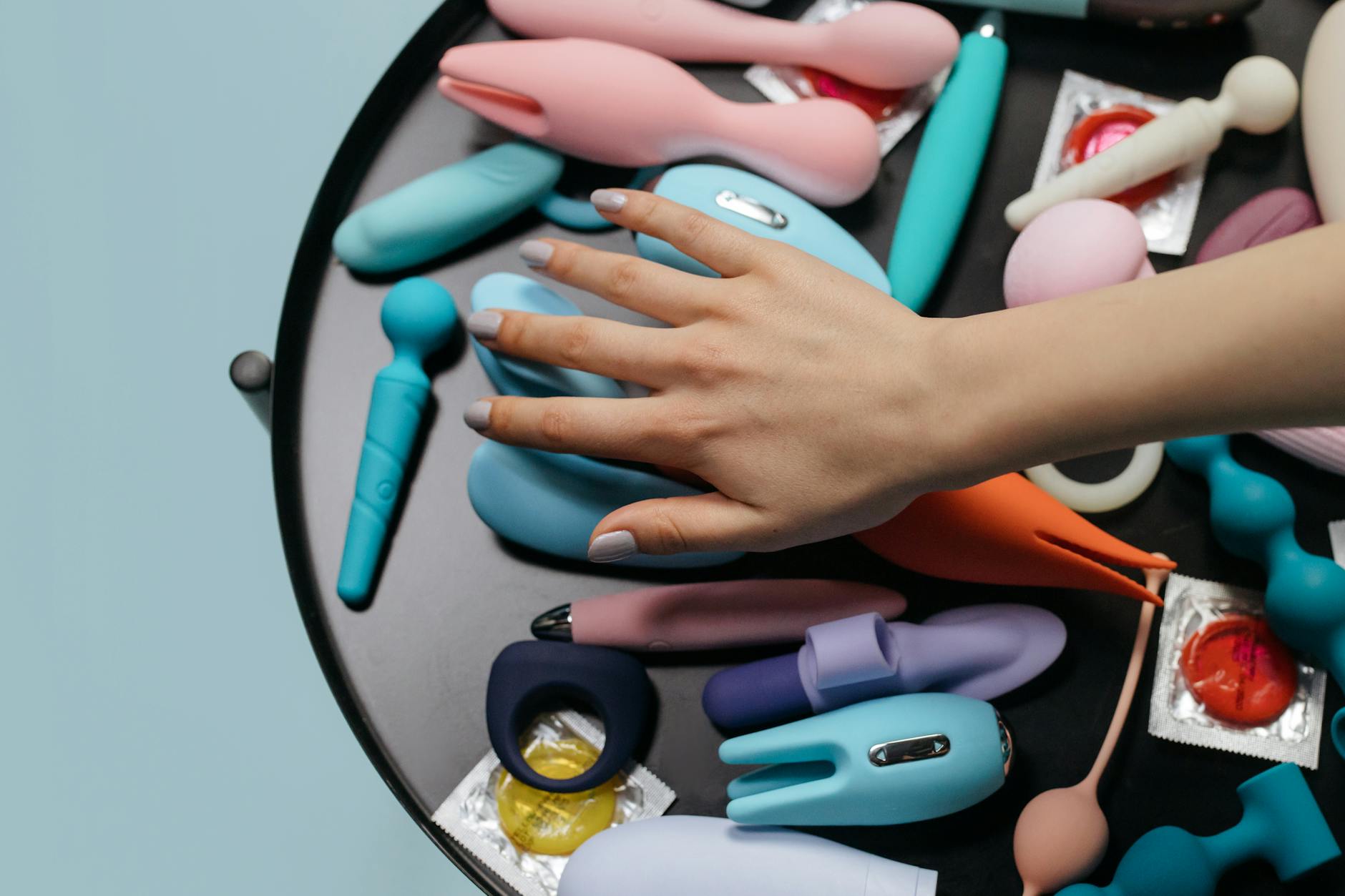
Photo by cottonbro studio on Pexels
What to avoid
Don't use it as a substitute for the emotional labor. Your partner still needs to actively participate in getting you aroused. The vibrator speeds the process, but it doesn't replace presence.
Don't frame it as a problem with yourself. "I'm sorry I'm slow" or "I wish my body worked like yours" reinforces shame. Instead: "Our bodies work differently, and here's how we work with that."
Don't expect it to work every single time. Sometimes arousal is fast for you naturally. Sometimes you're tired and the vibrator helps less. That's normal.
The long-term relationship angle
Most couples who stay together for decades eventually figure out that mismatched arousal timelines are one of the easier problems to solve. You have the internet. You have access to clitoral vibrators. You have the ability to talk about what you need.
The couples who struggle are the ones who pretend the gap doesn't exist or blame each other for it. Using a practical tool like a lemon vibrator is a way of saying: "I'm taking this seriously. I want us both to feel good. I'm not waiting for you to fix me, and I'm not asking you to slow down forever. Here's what works."
That conversation, by itself, strengthens the relationship. It moves you from a place of unspoken frustration to actual problem-solving.
When the vibrator isn't enough
If your arousal gap is wider than 20 minutes or if using a vibrator doesn't help, there might be other things happening. Stress, medication side effects, relationship dynamics that go deeper than timing. In that case, talking to a therapist makes sense.
But for the majority of people with this specific problem, a lemon clitoral vibrator and a five-minute conversation with your partner solves it.
FAQ
Can I use a lemon vibrator while my partner is inside me?
Yes, absolutely. A Lem vibrator is designed to fit during partnered sex. Many people find that having external clitoral stimulation during penetration makes the whole experience more intense and easier to orgasm. Start gentle and adjust the intensity based on what feels good.
Will using a vibrator during initiation make my partner feel replaced?
Not if you frame it right. If you say, "Let's use this together so I can feel amazing for you," most partners feel included, not replaced. You're literally inviting them to be part of the process. That's the opposite of replacement.
What if I'm faster to arousal and my partner is slower?
The same logic applies in reverse. You could use a Lem vibrator to stay engaged while your partner warms up. Or you could use it together as foreplay that works for both of your timelines. The tool doesn't care about direction.
Does using a vibrator mean something is wrong with our sex life?
No. It means you're both thoughtful enough to solve a real biological difference. Most long-term couples eventually use toys. It's the couples who don't talk about their needs that end up struggling.
How do I bring this up without making my partner feel like they're doing something wrong?
Don't lead with "You rush me." Lead with "I want us to feel good at the same time. Here's something that might help." Frame it as a solution you're offering, not a criticism.
What if my partner says no to using a vibrator?
That's a deeper conversation about whether they're open to creative problem-solving. If they refuse to acknowledge the timing gap or find solutions, you have a relationship issue that goes beyond this one tool. That might be worth exploring with a couples therapist.
The bigger picture
Your body's arousal timeline is not a flaw to apologize for. It's a reality to work with. When you stop fighting your own biology and instead build a plan that honors both partners' needs, sex gets better for everyone.
A lemon clitoral vibrator is one practical tool that makes that possible. It's not magic. It's just engineering and honesty working together.
If you're struggling with this timing mismatch and want to explore how to have the conversation with your partner, reach out. These are exactly the kinds of relationship dynamics that couples coaching can help untangle.