
Let's start with the thing nobody mentions
You're both ready to have sex. Except one of you is actually ready, and the other is still getting there. This is one of the most common rhythm mismatches in long-term relationships, and it creates a low-grade tension that feels impossible to fix without someone feeling bad.
Here's what I see in couples therapy: the faster partner waits, feels rejected. The slower partner senses the impatience, tenses up, which makes arousal take even longer. Both of you end up frustrated. The irony is that this is almost always fixable. Clitoral vibrators, particularly lemon vibrators and other air-suction styles, actually solve this by decoupling arousal readiness from penetration readiness. Let me explain.
Why arousal speed differs in the first place
First, the neuroscience. Some people have faster genital blood flow responses. Testosterone levels (yes, everyone has it, in different amounts) influence how quickly that happens. Mood, stress, medication, and how recently someone last had an orgasm all shift the timeline.
But here's what matters more in a relationship: mental arousal. One partner may need a conversation, a mental transition from work, or five minutes alone to switch modes. The other can flip it like a light switch. Neither is wrong. Neither is broken. The timing just doesn't align.
Adding a partner who's impatient or silent about their own readiness creates a second layer of friction. The slower partner feels pressure. Pressure kills arousal. So now they're slower and more self-conscious, which makes them slower still.
What lemon vibrators do for mismatched timing
A clitoral vibrator like the Lemon does something specific: it removes the need for one partner's body to be your generator of pleasure.
When you're waiting for your partner to catch up, penetration isn't the goal anyway. What you actually need is stimulation that doesn't depend on their arousal state. Air-suction clitoral vibrators are perfect for this because they're independent, targeted, and they work whether your partner is ready or not.
Here's the practical shift: instead of "I'm waiting for you to be ready," it becomes "I'm enjoying myself while you get there." That tiny reframe removes all the power dynamics. No one is watching the clock. No one is performing readiness they don't feel yet.
For the slower partner, this is everything. You can focus on your own sensations without the pressure of reciprocating. Your partner is occupied. There's no impatience radiating across the bed.
The setup that actually works
Honest conversation first. Not during sex. Beforehand. Something like: "I notice I get ready faster than you, and I don't want that to make you feel rushed." Simple. No blame. Then: "I'd love to use a vibrator while we're warming up. That way we're both enjoying ourselves."
If your partner has never seen lemon clitoral vibrators, show them the design. They're small, intuitive, and the suction pattern is nothing like traditional vibration. Many partners find them attractive rather than intimidating. A Lemon vibrator, for instance, looks more like modern design than a toy.
Then establish the rhythm that fits you both. Here are the patterns I see work:
Pattern 1: Parallel play. You use the vibrator on yourself while your partner touches you, watches, or does their own thing nearby. No performance. Just presence.
Pattern 2: Your partner uses it on you. This works beautifully for mismatched timing because it keeps them engaged with your pleasure while they're warming up. They can focus on your body, watch you respond, and build their own arousal naturally.
Pattern 3: Alternating intensity. You start solo with the vibrator while your partner is still transitioning. As they get more aroused, they engage more. By the time you're both ready for penetration (if that's the goal), you've already had pleasure, and the pressure is off.
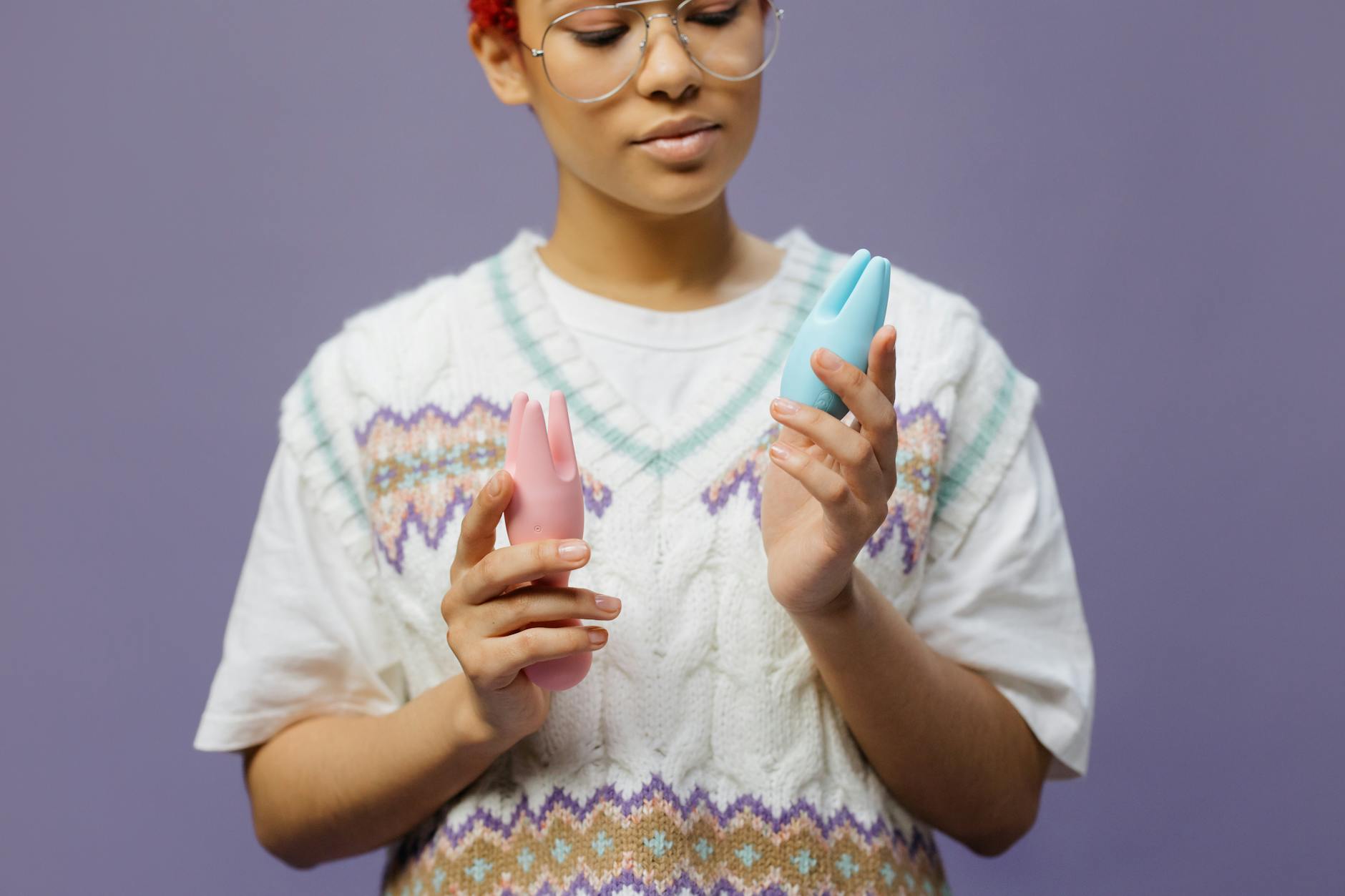
Photo by cottonbro studio on Pexels
The communication piece (it's bigger than you think)
Mismatched arousal speed is almost never actually about arousal speed. It's about feeling wanted.
The faster partner often interprets slowness as "they don't want me." The slower partner hears impatience as "I'm not enough." Neither is true, but without naming it, you both believe it.
When you introduce a vibrator, you're also introducing a conversation. "This isn't because you're not attractive. This is because our bodies have different timelines, and I want us both to feel good." That statement is revolutionary in most relationships.
Some partners worry the vibrator means they're doing something wrong. They're not. Clitoral stimulation during partnered sex is normal, helpful, and often necessary. Studies consistently show that most people with vulvas need direct clitoral contact to orgasm during partnered sex. A vibrator isn't a replacement for your partner. It's a tool that lets both of you relax.
When to use it, when to skip it
You don't need to use a lemon vibrator every time. That's the point. You use it when timing is mismatched and you want it to be less of an issue.
I recommend starting with it 2-3 times a week if arousal speed is a consistent friction point. Let it become normal. Once it's woven into your routine, it stops feeling like a workaround and becomes just another thing you do together.
On nights when arousal feels synchronized, skip it. Let your body have that connection. The vibrator is for the nights when one of you needs a little help getting there without the other one holding their breath.
The unexpected benefit
Here's what couples tell me: using a clitoral vibrator together actually deepens arousal. The person using it experiences more intense sensations. The partner watching or participating sees their partner's pleasure more clearly. Both of you end up more turned on than if you'd just waited around.
It also compresses the frustration period. Instead of fifteen minutes of waiting and tension, you have fifteen minutes of actual pleasure. The math is simple: more pleasure, less resentment.
When to check in with a professional
If arousal speed differences are part of a bigger pattern where one partner feels consistently undesired, that's worth talking through with someone. A sex therapist or couples counselor can help you untangle whether this is a timing issue or a desire issue. Those are different problems with different solutions.
If one partner has no interest in the vibrator or in bridging the arousal gap, that's also worth exploring. Sometimes resistance is about shame, sometimes it's about feeling inadequate, sometimes it's about past experiences. A therapist can help you both figure out what's underneath.
But if it's just timing, if you both want to feel good, and you're both willing to try something new? A lemon clitoral vibrator solves this in about three uses.
FAQ: Mismatched arousal and vibrators
Will using a vibrator make my partner feel replaced?
Not if you frame it correctly. The key is positioning it as a tool that lets you both enjoy yourselves rather than a workaround for them being "too slow." Many partners actually feel relieved. It removes the pressure of being someone's only source of stimulation. When you introduce it as "I want us both to feel amazing," most partners are on board.
What if my partner is embarrassed about how long they take to get aroused?
This is worth addressing before you bring in a vibrator. Let them know that arousal timing is completely normal and varies wildly. Slower arousal often means more intense orgasms, more pleasure, better staying power. It's not a flaw. Once they hear that from you (and maybe a therapist), they'll feel less self-conscious. Then the vibrator becomes a tool, not a reminder of something they're insecure about.
Should I ask permission before using a vibrator during sex?
Absolutely. Even if you've talked about it in theory, check in the moment. "Can I use this?" takes ten seconds and completely shifts the energy. It makes your partner a participant rather than someone something is happening to. Most people say yes immediately. Some need a second to adjust. That conversation matters.
How long should I use it before moving to penetration?
There's no timeline. Use it as long as feels good. If you want to transition, wait until you feel your partner actively wanting to move toward penetration. The goal isn't to rush through foreplay. It's to let both of you enjoy the phase you're in without pressure.
If I'm the faster partner, is it okay to use a vibrator while waiting?
Completely okay. You're not being selfish. You're occupying yourself with pleasure instead of watching the clock. That's actually generous because it removes the impatience your partner would otherwise feel. Many couples find that when the faster partner is focused on sensation, the slower partner relaxes and actually speeds up naturally.
What if we try this and nothing changes?
If mismatched arousal persists even with tools and communication, there might be something deeper. Stress, health issues, medication side effects, or relationship resentment can all affect arousal. That's worth exploring with a professional. A vibrator helps with timing. It doesn't fix desire problems. But it does eliminate one variable so you can see what's actually going on.
The last thing
Mismatched arousal is one of the easiest couple problems to solve because the solution is practical and immediate. You're not asking anyone to change their personality. You're not asking the slower partner to rush or the faster partner to suppress their desire.
You're just saying: both of us deserve pleasure, on our own timeline, without guilt or pressure. A clitoral vibrator makes that possible. When both partners feel desired and satisfied, the timing issues fade. What's left is just two people who know how to take care of each other.
If you want to learn more about navigating pleasure with a partner, our guide on how to use lemon vibrators with a partner when you feel self-conscious covers the shame piece specifically.
For couples dealing with deeper communication gaps, check out how to use lemon vibrators when communication with your partner feels difficult. Both conversations matter.