
Let's name what's actually happening
Infidelity doesn't just wound the relationship. It wounds your body's sense of safety. Even after your partner has apologized, even after you've decided to stay and try again, your nervous system hasn't necessarily caught up. Sex feels different. Your body might freeze, or go numb, or respond in ways that feel betraying to your own healing. That's not failure. That's your system doing exactly what it's supposed to do.
Rebuilding intimacy after infidelity is not about forcing yourself back into sex quickly or "proving" the relationship still works. It's about slowly, intentionally reconnecting with your own pleasure first. Then, gradually and with full control, deciding what you want to share with your partner.
Why your body's response right now makes complete sense
When trust is broken, your body responds to your partner the same way it would to any threat. The parasympathetic nervous system (the one that allows arousal and pleasure) gets hijacked by the sympathetic system (fight, flight, freeze). Sex that felt natural before now requires you to override your own protective instincts.
Many people in this situation report that their desire has disappeared entirely, or that they feel disconnected from pleasure when they're with their partner. Some freeze mid-intimacy. Some can't orgasm, even though they could before. These are trauma responses, not relationship failures. Your body is protecting you until it feels safe again.
The second part of this is harder to say out loud: pleasure, especially orgasm, can feel like betrayal. If you climax with the person who hurt you, part of your mind interprets that as forgiveness you might not actually be ready to give.
The non-negotiable first step: solo reconnection
Before you bring your partner into this, you need to reclaim your own body. This isn't about being selfish. It's about re-establishing the neural pathway between your body and pleasure without the weight of the relationship sitting on top of it.
Spend time alone touching yourself, without any goal or expectation. Notice what feels good. Notice what feels uncomfortable. Notice where you hold tension. This is the foundation everything else builds on.
When you're ready to add a tool, something like a lemon vibrator or a clitoral suction toy works particularly well here because it takes the pressure off. You don't have to "perform" anything. You don't have to worry about your partner's experience. You're simply experiencing what your own body is capable of.
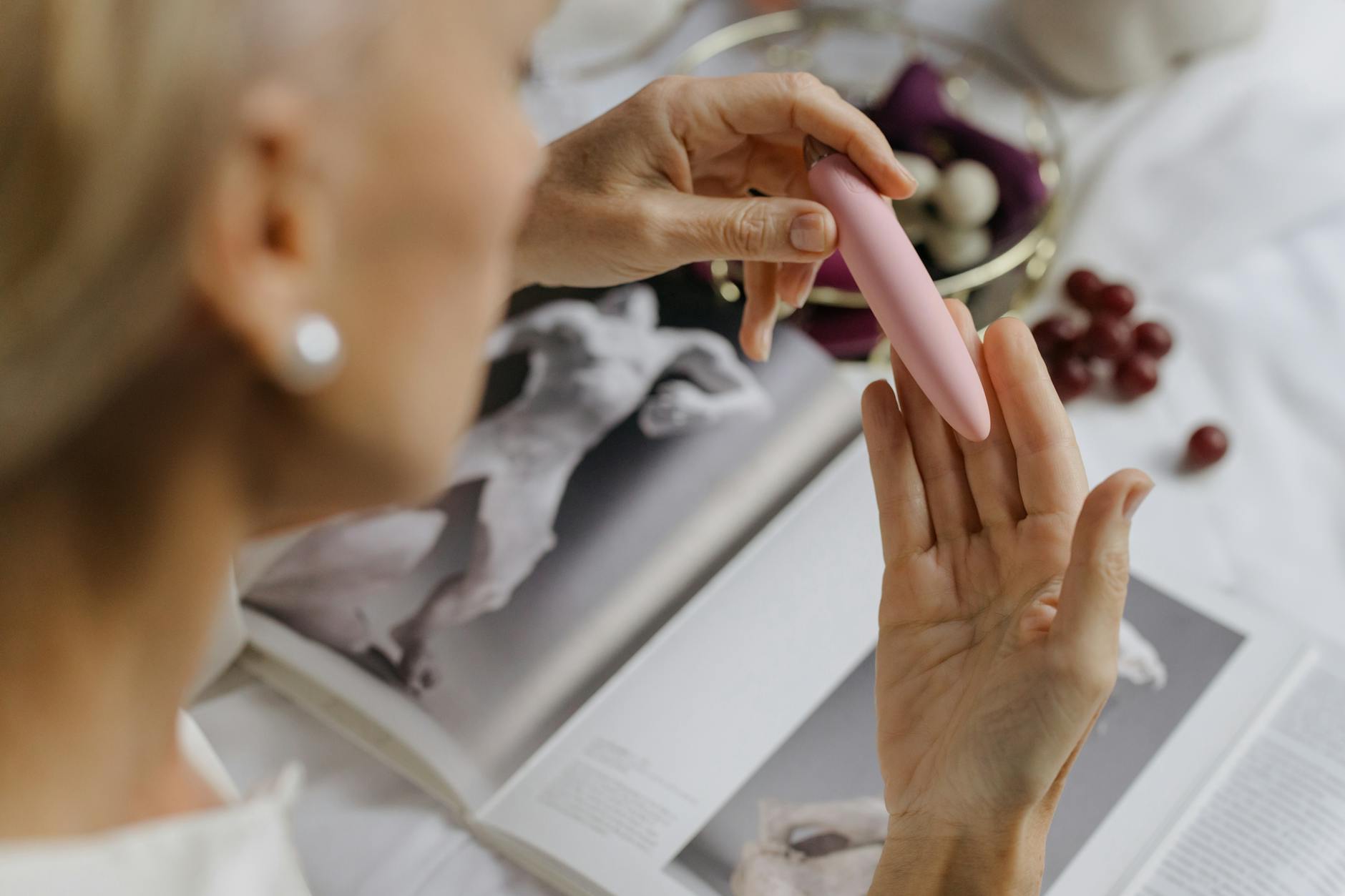
Photo by cottonbro studio on Pexels
How clitoral vibrators help you rebuild trust in your own pleasure
Here's the thing about tools like Lemon Nancy's clitoral vibrators: they give you predictability. The lemon clitoral vibrator delivers consistent stimulation in a way that human touch, especially when you're nervous, often can't. There's no variation in pressure that triggers doubt. No changing rhythm that makes you second-guess what's happening.
When you're rebuilding, predictability is trust.
Start at the lowest setting. Spend 20-30 minutes just experiencing the sensation without pushing toward an orgasm. If you climax, great. If you don't, that's also information. Both tell you something about where your body is in the healing process.
Many people rebuilding after infidelity find that orgasms return in stages. First, the body can achieve pleasure in solo contexts. Then, with time and consistent safety cues, arousal starts to return when the partner is present. Then, eventually, orgasm with a partner becomes possible again. But this takes months, sometimes longer. There's no timeline you're "supposed" to be on.
When you're ready to include your partner: ground rules first
This conversation needs to happen clothed, away from the bedroom. You might say something like: "I want to try using a lemon vibrator together, but I need you to understand that this is about me reclaiming my body and pleasure. My orgasm isn't about you or our relationship. It's about me rebuilding trust in myself." Repeat that as many times as you need to.
Set clear boundaries before you start. Maybe your partner can be present but not touch. Maybe you use the vibrator, and your partner simply watches. Maybe you're comfortable with them touching you elsewhere while you use the toy on yourself. Define this explicitly. Ambiguity will trigger your nervous system faster than anything else.
If at any point during partnered intimacy you feel unsafe, frozen, or disconnected, stop. Full stop. Your partner should already know this is the agreement.
The three-stage approach to rebuilding partnered pleasure
Stage One: Solo use, partner present. You're in control of the lemon vibrator or clitoral suction toy. Your partner is present in the room but not directing anything. This lets your body experience pleasure with them nearby without the pressure of responding to their touch.
Stage Two: Collaborative exploration. You use the vibrator while your partner touches other parts of your body. You stay in control of the toy. They follow your cues. This is about rebuilding the sense that touch from this person can feel good again.
Stage Three: Mutual pleasure. Once your system feels genuinely safe (and this could take months), you might use a vibrator together as part of broader intimacy. But even here, the clitoral vibrator stays in your hands or under your control.
Don't rush these stages. The fact that you're in stage one at month six doesn't mean you've failed. It means you're being honest about what your body actually needs.
What happens when pleasure triggers shame
Some people notice that reaching orgasm after infidelity feels complicated by guilt. You're climaxing with the person who betrayed you, and your brain won't shut up about that contradiction. This is another normal response, not a sign you're broken.
If this is happening, therapy that specifically addresses trauma and rebuilding (like EMDR or trauma-focused CBT) can help your nervous system process the injury more efficiently. A couples therapist trained in infidelity recovery is invaluable here too. They help both of you understand that rebuilding intimacy is a skill, not a feeling you can force.
Sometimes pleasure also triggers grief. You've lost something in this relationship, and your body knows it. The ease, the trust, the uncomplicated joy in sex with this person. Grief and pleasure can coexist. Let them.
The patience piece that actually matters
Here's what I tell couples rebuilding after infidelity: your body will heal on its own timeline, not on the timeline you think is reasonable. Some people reconnect physically within six months. Some take years. Both timelines are normal.
Using tools like a lemon clitoral vibrator or other clitoral stimulation devices gives you agency while you're rebuilding. You're not waiting passively for desire to return. You're actively rediscovering your own pleasure, on your own terms, at your own pace. That matters more than almost anything else.
The relationship might survive infidelity. What actually determines whether intimacy returns is whether you can rebuild trust in your own body first, and then slowly extend that trust to your partner. A vibrator isn't the solution to infidelity. But it's a tool that puts the power of healing back where it belongs: with you.
People also ask
Is it normal to feel nothing during sex after your partner's infidelity?
Completely normal. Your nervous system has been triggered by betrayal, and it doesn't immediately separate "this person betrayed me" from "this person is touching me now." The numbness or disconnection you're experiencing is a protective response, not a character flaw. Healing happens with time, safety cues, and often professional support. Many people find that pleasure gradually returns once their system has processed some of the initial trauma.
Can using a vibrator help rebuild physical intimacy with a partner?
Yes, but with an important caveat: the vibrator is a tool for you to reclaim your body and pleasure first. When used as part of partnered intimacy, it can help because it puts you in control, allows you to experience pleasure without having to override your own safety signals, and gives your partner a different role than the one that might trigger your trauma response. The key is that you're directing the experience.
How long does it take to feel sexually attracted to a partner again after infidelity?
There's no standard timeline. Some people experience desire returning within weeks. Others take six months or longer. The return of desire often follows a pattern: physical pleasure returns first (through solo exploration), then arousal in the presence of the partner, then orgasm with the partner, then authentic desire. Don't compare your timeline to anyone else's.
Should I confront my partner about what they did during sex?
No. During intimate moments is the worst time to process betrayal. Have difficult conversations clothed, away from the bedroom, ideally with a therapist present. Sex is for experiencing pleasure and connection, not for working through trauma or conflict. Keep those conversations separate.
What if I still don't want sex with my partner after several months?
That's important information. It might mean you need more time. It might mean you need professional support to process the trauma. And it might mean that sexual incompatibility has deepened the relationship wound beyond what you want to repair. Any of those is valid. A couples therapist can help you discern which one is true for you.
Can using lemon vibrators or other clitoral toys cause numbness after infidelity trauma?
The numbness you're experiencing isn't caused by the vibrator. It's a symptom of your nervous system protecting you. Using a tool like a lemon clitoral vibrator might actually help you work through that numbness, because the predictable stimulation can help your system gradually shift out of freeze mode. Start gently and pay attention to what your body is telling you. If something feels off, stop.
Moving forward
Rebuilding intimacy after infidelity isn't about forcing sex or proving the relationship is "fixed." It's about slowly, vulnerably, and at your own pace, reclaiming your body and your pleasure. Whether you do that with a partner depends entirely on whether you eventually feel safe enough to share that with them again. There's no obligation to do so. Your pleasure is yours first, everything else second.