Let's be real about postpartum arousal
Six weeks after birth, your OB clears you for sex. By week seven, your partner is probably hopeful. By week eight, you might be frustrated that you're not feeling much of anything. That's not abnormal. That's not a sign something broke. That's postpartum.
Arousal after pregnancy doesn't work on your old timeline. It's not slower in a linear way. It's slower in a scattered, unpredictable, sometimes-nonexistent way. And because nobody talks about this part of postpartum recovery, most people assume they're the broken ones.
They're not. Your body is reorganizing itself. Your nervous system is doing the work of keeping a baby alive. Your oxytocin is mostly bonded to your infant, not to your partner. Arousal will come back, but it's going to take some patience and some tools that actually work with your postpartum body instead of against it.
What pregnancy and birth actually did to arousal
Three separate systems need to reset.
Physical changes. Pregnancy stretched your pelvic floor (sometimes to the point of tear, sometimes not). Vaginal tissue is thinner if you're breastfeeding because prolactin suppresses estrogen. Your perineum is healing, either from tearing, episiotomy, or just the sheer pressure of labor. Your abdominal wall has separated. Blood volume is still stabilizing. None of this means you can't feel pleasure. It means the setup is different.
Hormonal chaos. Estrogen drops by 90% in the first week postpartum. Progesterone collapses. Prolactin spikes. Oxytocin is bonded to your baby's cry. Your body doesn't have the right hormonal recipe for arousal yet. This isn't about willpower. It's chemistry.
Nervous system exhaustion. You're managing constant touch demands (baby touching you, partner wanting to touch you). Your nervous system is in survival mode. The parasympathetic activation needed for arousal takes a backseat to the sympathetic activation needed to keep everyone fed and safe.
All three matter. Only one of them is something you can directly control.
The realistic timeline for arousal rebuilding
If your medical clearance was six weeks postpartum, assume arousal rebuilding takes four to six months minimum. Some people report it takes a year. Some report two years. That's not failure. That's normal variance.
The first two months are usually numb. You might not even want to be touched. That's protective, not pathological. Your body is saying, "I've been used up enough." Listen to that.
Months three and four are when interest sometimes returns, but inconsistently. You might have one night where you feel alive, then five nights where you feel nothing. You might feel good with your own hand and flat with a partner. You might crave touch one day and need total solitude the next.
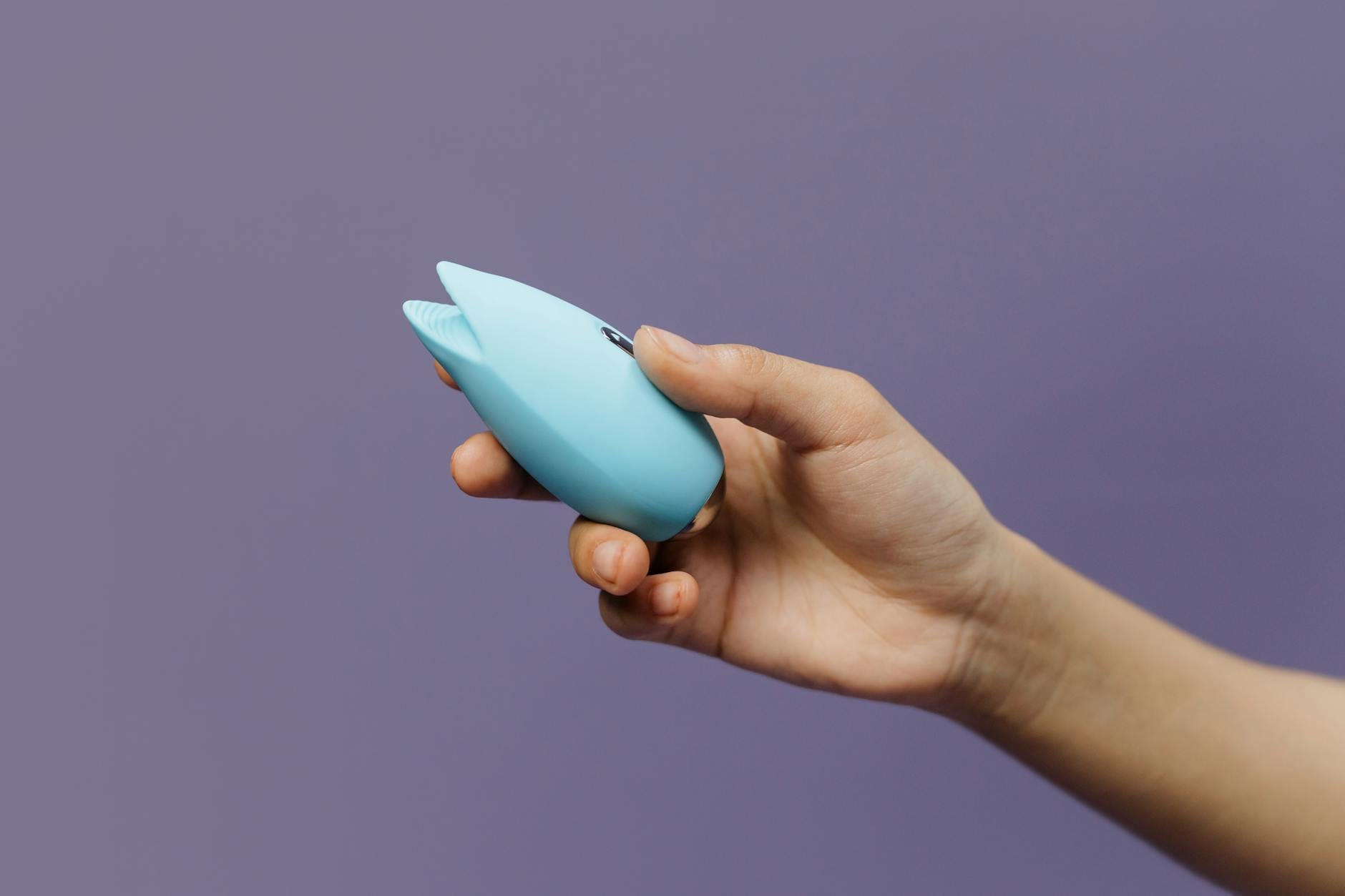
Months five onwards is when the oscillation starts settling. Arousal becomes less binary. You start to know what actually helps. That's when tools like lemon vibrators get genuinely useful, because you now have enough baseline sensation to know what you're working with.
Why the Lem actually works postpartum
There are four reasons I recommend lemon suction vibrators specifically to postpartum people rebuilding sensation.
First: suction doesn't require the same pressure as vibration. Your tissues are healing. Direct friction, especially from a traditional vibrator, can feel irritating or too intense. Suction stimulates the same nerves but with a gentler mechanical profile. It's more forgiving.
Second: it demands less cognitive load. With a vibration-only toy, you're in your head counting rhythm. With suction, the sensation is immediate and almost hypnotic. Your exhausted brain doesn't have to work as hard. That matters when arousal is already fragile.
Third: it works on desensitized tissue. Postpartum numbing is real and common. The clitoral suction approach stimulates more nerve endings across a broader surface area than a traditional vibrator, which means you might feel something when you otherwise wouldn't.
Fourth: it's quiet. If you're postpartum and anxious about noise while a baby is sleeping in the next room, the lemon vibrators are whisper-soft. That removes one more barrier to permission.
The practical setup that actually helps
Three conditions matter more than anything else.
Timing. Use your vibrator when the baby is asleep, not when you're about to wake them. Your nervous system needs time to settle. Midday naps are better than nighttime. You need at least 30 minutes of runway where you're not about to be interrupted. The anxiety of interruption kills arousal faster than anything else.
Lubrication. Water-based, always. Prolactin suppression means natural lubrication might be minimal. You're not broken. You need support. A good lube means sensation that would otherwise feel rough instead feels smooth. That changes everything.
Solo first. This is not about your partner. This is about reconnecting with your own body. Pressure to perform for someone else is the fastest way to keep arousal suppressed. Spend two to four weeks exploring on your own before bringing a partner back into the picture. Your relationship will thank you.
What rebuilding sensation feels like
Don't expect a light switch moment. Arousal comes back in patches. You might feel a warm spot here, a tingle there. One session you'll feel a clear response. The next session: nothing. That's not regression. That's how postpartum nervous system recovery actually works.
The first time you have an orgasm postpartum, it might be different from what you remember. It might be shallower. It might be more localized. It might take twice as long. All of that is normal. Your body is running different software now.
After a month or two of solo exploration with a clitoral vibrator like the Lem, you'll have a clearer sense of what actually works. Then you can bring that knowledge into partnership. You can tell your partner, "I need 20 minutes of buildup" or "Suction feels better than vibration right now" or "I need to initiate this myself."
That honesty is what rebuilds intimacy faster than forcing sex on the old timeline.
Managing the emotional layer
Here's what I see in my practice constantly: the physical recovery is the easy part. The emotional recovery is where people get stuck.
You might feel touched out. You might feel resentful of your partner for wanting sex when your body has been used for nine months of pregnancy and then nursing. You might feel guilty for not wanting him the way you used to. You might feel broken or defective. All of those feelings are real and also completely normal.
Don't push yourself into sex to "get back to normal." That's how you end up resenting your partner and your body. Instead, separate the conversation. "I'm rebuilding arousal" is different from "I don't love you." "My body needs time" is different from "I'm rejecting you."
Lot of couples benefit from redirecting that energy into non-sexual touch. Hand-holding. Massaging shoulders. Sleeping skin-to-skin. That keeps your partner connected without demanding arousal from you.
When to get support
If it's been 6-8 months and you have zero interest in any kind of sexual sensation, talk to your doctor. That might be postpartum depression or postpartum anxiety, which are both real medical conditions that kill arousal.
If you had a traumatic birth or a tear that required repair, a pelvic floor physical therapist specializing in postpartum recovery can help. They're not just about Kegels. They can address scar tissue, tension, and the reconnection between your brain and your pelvic floor.
If your relationship is strained because of the sex gap, a couple's therapist is worth it. My training is in the Gottman Method, and I can tell you that this is one of the most common transitions where couples either grow closer or grow apart. Getting support early makes a difference.
FAQ about postpartum arousal and lemon vibrators
Is it safe to use a vibrator while breastfeeding?
Completely safe. Nothing you do with a vibrator affects milk supply or breastfeeding. Oxytocin is released during arousal and also during milk letdown, so technically an orgasm might trigger some milk expression, but that's harmless. If it bothers you, just use a vibrator when you're not actively engorged.
How long after a C-section should I wait before using a vibrator?
Same timeline as vaginal birth. Medical clearance is typically six weeks. After that, you can use a vibrator, but start gently. Your abdominal wall is healing, and sometimes vibration can feel uncomfortable higher up even if the perineal area feels fine. Listen to your body.
Can I use a lemon vibrator if I had a tear or episiotomy?
Yes, but timing matters. If you're still having pain three weeks in, wait. If the area is healing well and you got medical clearance, you can start with external stimulation only. A clitoral suction vibrator like the Lem is actually gentler on healing tissue than traditional vibrators because it doesn't require the same direct pressure.
What if my partner feels hurt that I want to rebuild arousal solo first?
Explain it like this: "Rebuilding sensation is a solo process. It's not about you. It's about me remembering what my body can feel like. Once I have that baseline back, we can explore together." Most partners understand that better than "I don't want you right now." Frame it as building toward partnership, not away from it.
Will my arousal ever feel like it did before pregnancy?
Maybe. Maybe not. Many people report that postpartum arousal is different, not worse. Sometimes it's slower to build but more intense once it arrives. Sometimes the reboot actually improves things because you're more in your own body and less in your head. Give it time before you assume "broken."
Is it normal that I have no libido at 4 months postpartum?
Completely normal. The bell curve is wide. Some people feel interest again at three months. Others need nine to twelve months. Breastfeeding suppresses estrogen harder, so if you're nursing, expect a longer timeline. That's not abnormal. That's biology.
The bottom line
Postpartum arousal isn't about forcing yourself back to your pre-baby baseline. It's about meeting your postpartum body where it actually is and rebuilding from there. Lemon vibrators help because they work with healing tissue, quiet your nervous system, and don't require the kind of intensity your body might not be ready for yet.
Give yourself grace. This phase is temporary. The arousal will come back, and when it does, it might surprise you with what it feels like now. Until then, tools like the Lem and permission to move slowly are your friends.
If you're struggling with the emotional weight of this transition alongside the physical recovery, reach out to a therapist who specializes in postpartum transitions. You don't have to white-knuckle your way through this alone.