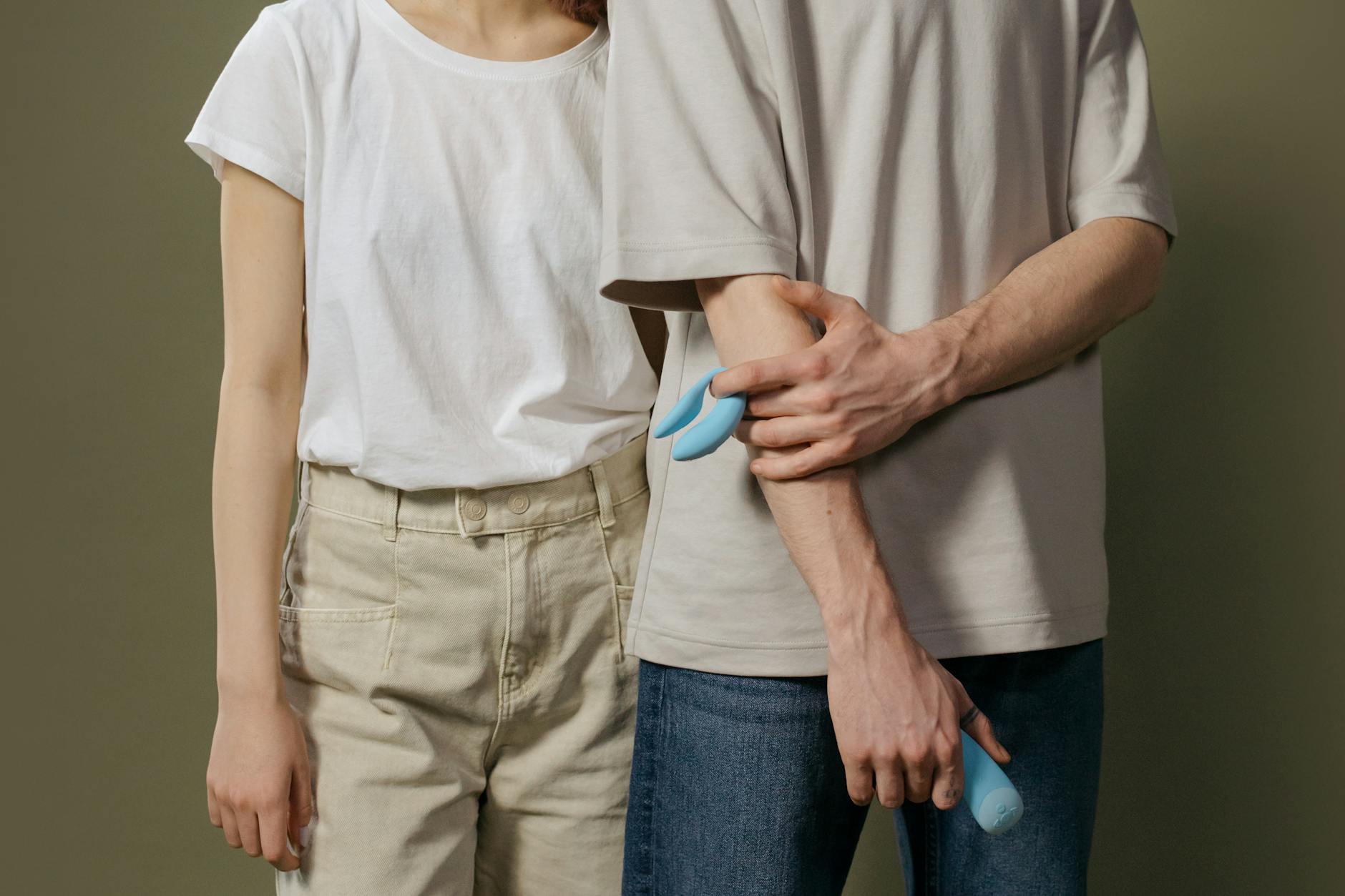
Let's talk about the pain that nobody wants to name
Vulvodynia is chronic pain in the vulva with no visible cause. Chronic pelvic pain can radiate through the whole region. Both are real, both are disabling, and both destroy intimacy because most traditional vibrators make the pain worse, not better. So people stop trying. They assume pleasure is off the table.
It doesn't have to be.
Why ordinary vibrators fail when you have vulvodynia
Here's the mechanical problem. A standard vibrator buzzes at the same frequency in the same direction, usually with sharp, concentrated pressure. If your vulva is already in pain, that repetitive jackhammer sensation doesn't feel like stimulation. It feels like assault.
The issue isn't that you're broken. It's that the tool is the wrong shape for the problem.
Vulvodynia and chronic pelvic pain come from a tangle of causes. Sometimes it's nerve hypersensitivity where the pain signals are overactive. Sometimes it's pelvic floor tension so chronic that the muscles have forgotten how to relax. Sometimes it's trauma stored in tissue. Sometimes it's hormonal. Often it's all of these at once.
What they share: touch that feels safe, gentle, and rhythmic actually helps repattern the nervous system. Touch that's aggressive or unpredictable makes it worse.
The lemon vibrator advantage for pain management
Lemon clitoral vibrators like those from Hello Nancy work differently than traditional vibrators because they use air-suction technology instead of direct vibration. Here's what that means for someone with vulvodynia.
Instead of pressure, suction creates a gentle pulse that draws tissue upward. The sensation is rhythmic but diffused. It doesn't concentrate pain in one spot. The clitoral tissue gets stimulation without the harsh mechanical friction that triggers pain signals.
I've watched clients with moderate to severe vulvodynia respond to lemon vibrators in ways they never did to standard tools. The shift happens because the nervous system perceives the sensation as safe. When your brain stops sending pain signals, pleasure can finally get through.
What makes a lemon vibrator different from traditional vibrators
Three mechanical features matter here:
1. Broad contact surface. A lemon vibrator's cup covers more tissue area, distributing sensation across a wider zone instead of concentrating it in one point. Concentrated pressure is what triggers pain escalation in vulvodynia. Dispersed sensation feels more like a massage than a poke.
2. Adjustable intensity from the floor up. Most clitoral vibrators start at a medium buzz and go up from there. A good lemon vibrator starts whisper-quiet on pattern 1. You can build sensation slowly, giving your nervous system time to recognize it as safe before turning up the volume.
3. Rhythm over raw power. A lemon sucker pulses at a steady cadence. Your brain can anticipate the next pulse. That predictability is calming for a nervous system that's in threat mode from pain.
These design elements aren't luxuries. They're what allows people with vulvodynia to experience pleasure again.

Photo by cottonbro studio on Pexels
Starting slow if you're in pain
If you have chronic vulval pain, jumping straight to a vibrator isn't the move. The sequence matters.
First, work with a pelvic floor physical therapist or a vulvodynia specialist. Understand what type of vulvodynia or pelvic pain you have, whether it's localized or generalized, whether tension is part of the picture. This shapes how you'll approach a lemon vibrator.
Second, spend time on non-vibrator touch. Use hands. Use lubrication. Get comfortable with sensation again without the hum. This rewires the nervous system to expect pleasure from touch.
Third, introduce the lemon vibrator at the lowest setting during a moment when you're truly relaxed. Not when you're trying to prove something or push through pain. When you're genuinely curious. Start on the outside, not directly on sensitive areas. Let your body learn that this rhythm is safe.
Many people find that pairing a lemon clitoral vibrator with breathing or meditation amplifies the nervous system reset. When you breathe slowly and deeply while the gentle pulse works, your body learns a new pattern. Touch plus breath plus rhythm equals safety, which equals pleasure.
Combining lemon vibrators with other pain strategies
A lemon vibrator isn't a replacement for medical care. It's a complement. The people who get the best results use them alongside other treatments.
If you're doing pelvic floor physical therapy, a lemon vibrator can reinforce the relearning of relaxation between sessions. If you're using topical numbing creams or hormonal treatments, the vibrator works once those are part of your routine. If you're in therapy processing trauma, the gentle rhythm can support that nervous system retraining.
The magic isn't in the device. It's in using it as part of a coherent approach to pain. A lemon vibrator by itself won't cure vulvodynia. But paired with the right support, it gives your nervous system a way back to pleasure.
When pain comes up during use
If you're using a lemon vibrator and pain increases instead of decreasing, stop. That's information, not failure.
Pain during stimulation usually means one of four things. Your nervous system isn't ready yet and needs more time on basic touch without vibration. You're holding tension in the pelvic floor and need to pause and breathe. The intensity is too high even on the lowest setting, which is rare but happens. Or you've hit a trauma trigger and need to work with a therapist before continuing.
None of these are reasons to give up. They're reasons to adjust the approach.
Some people find that using a lemon vibrator through clothing helps at first. The sensation is muffled, which can feel safer. Others need complete silence and no pressure to relax enough. Some need a partner present for emotional safety. Others need to be completely alone. There's no wrong way. The right way is whatever lets your nervous system stay in a parasympathetic state (that's the calm, rest-and-digest mode where pleasure actually works).
The intimacy shift when pain decreases
Vulvodynia and chronic pelvic pain isolate you. Your partner doesn't understand why touch that's supposed to feel good feels like pain. You start avoiding intimacy to avoid the conversation. The relationship erodes.
When you find a tool like a lemon vibrator that actually helps, something shifts. You're not broken. The problem was the fit between your nervous system and the tool. Once you have a tool that works, you can explore pleasure again. You can rebuild intimacy with a partner from a place of success instead of failure.
I've seen couples who hadn't had sex in years restart their intimate life after one partner found the right clitoral vibrator. The device itself isn't the point. The point is that pleasure becomes possible again, and with it, connection.
Frequently asked questions about lemon vibrators and pelvic pain
Can a lemon vibrator make vulvodynia worse?
Only if it's used wrong or too aggressively. That's why starting on the lowest setting matters. A lemon sucker at pattern 1 is gentler than most hands-on touch. If you're in acute pain, pause and return to it when you're more comfortable. The goal is to build the association between vibration and safety, not to push through pain.
How long does it take to feel relief from a lemon vibrator if you have chronic pelvic pain?
It varies wildly. Some people feel a shift in sensation within one or two uses. Others need weeks of slow, gentle introduction before the nervous system stops perceiving the stimulus as a threat. Patience matters more than frequency. Using it once per week with full relaxation beats using it three times per week while tense.
Is there a lemon vibrator setting that's safest for vulvodynia?
Start at pattern 1 and stay there for several sessions. The lowest setting on a quality lemon vibrator is often more effective than jumping to higher patterns because it doesn't overwhelm the nervous system. Once pattern 1 feels genuinely pleasurable (not neutral, pleasurable), try pattern 2. The slow progression gives your body time to rewire.
Can you use a lemon clitoral vibrator if you're also in physical therapy for pelvic floor dysfunction?
Yes, but coordinate with your therapist. If they're teaching you pelvic floor relaxation, a gentle lemon vibrator can reinforce that learning. If they're working on strengthening, the timing might be different. A good pelvic floor PT will tell you when it's safe to introduce vibration.
Does lubrication help when using a lemon vibrator for pain?
Absolutely. Water-based lubricant reduces friction and makes the sensation feel less intense. Even if you're not experiencing arousal, lube creates a buffer that many people with vulvodynia find essential. It changes the sensation from sharp to smooth.
What if a lemon vibrator still causes pain after weeks of trying?
Then that particular design might not be your tool, and that's okay. Some people with severe vulvodynia need even more gentle approaches, like external wand vibrators used at extremely low power, or hands-on touch only. Others find that vibration isn't right for them at all. The goal is pleasure, not proving you can use a vibrator. If something else works better, use that.
The path back to pleasure
Vulvodynia and chronic pelvic pain convince you that your body is broken, that pleasure is something that happens to other people. A lemon vibrator won't fix the pain condition itself. But it can be the tool that lets you experience pleasure despite the pain, which rewires everything about how you relate to your body.
That shift is what matters. When you realize pleasure is still possible, intimacy becomes possible again. When intimacy is possible, you're not alone with the pain anymore.
If you're exploring this path, go slow. Build safety first. The pleasure will follow. And if you want to talk through how to approach this in your specific situation, we're here to help. Reach out anytime.